

15 Sarawak Noodles You Have To Try
When visiting Sarawak, also known as the Land of the Hornbills on the island of Borneo, food is undoubtedly one of the main highlights every traveller should explore. Among the many local delicacies found throughout the state, this guide on the 15 Sarawak noodles you have to try focuses on some of the most unique, delicious, and iconic noodle dishes that make Sarawakian cuisine so different from the rest of Malaysia.
Most visitors will usually begin their journey in Kuching, the capital city of Sarawak, before travelling further north to towns and cities such as Sibu and Miri. Along the way, there are countless opportunities to sample authentic Sarawak food at local coffee shops, hawker centres, cafes, restaurants, and even hotel coffee houses. One thing you will quickly notice is that Sarawak noodles have their own distinctive flavours, preparation styles, and local ingredients which are rarely found in West Malaysia.
From the world-famous Sarawak Laksa and Kolo Mee to lesser-known local favourites enjoyed by the people of Sarawak, noodle lovers will find plenty of exciting dishes to discover throughout the state. Rather than focusing on specific restaurants or hawker stalls, this article highlights the different types of Sarawak noodles to look out for when exploring the cities and towns across Sarawak.
Below is a list of unique, interesting, and highly recommended noodle dishes that every foodie traveller should try at least once while visiting Sarawak.
 |
| This Kolo Mee is one of the unique ones, with everything added inside. |
1. Kolo Mee
Kolo Mee is undoubtedly one of the most famous noodle dishes in Sarawak and can easily be found throughout the state, from small villages and local towns to major cities like Kuching, Sibu, and Miri. This iconic Sarawak noodle dish is loved by both locals and visitors for its simple yet flavourful preparation and comforting taste.
Kolo Mee is traditionally made with springy egg noodles and served dry, lightly tossed with fragrant shallot oil and seasonings, though soup and fried versions are also available. The dish is most commonly sold by the local Chinese community and is traditionally topped with slices of char siew (roasted pork). Due to its popularity across Sarawak, halal and pork-free versions are also widely available at Malay eateries and halal coffee shops, where chicken or beef is used as a substitute for pork.
Depending on where you eat it, Kolo Mee usually costs around RM3 to RM6 per bowl, though prices in larger cities and tourist areas may be slightly higher. Some hawkers and restaurants also offer a special version known as Kolo Mee Special, which includes additional ingredients such as prawns, dumplings, minced meat, or even pork innards for a more luxurious local noodle experience.
 |
| Sarawak Laksa is one of the world’s most famous noodles. |
2. Sarawak Laksa
Sarawak Laksa is one of the most famous noodle dishes in Sarawak and gained worldwide attention after the late Anthony Bourdain visited Kuching to sample this iconic local delicacy. Since then, many travellers have made it a point to try Sarawak Laksa when visiting Borneo. However, one thing you will quickly discover is that every local seems to have their own favourite stall or restaurant serving the “best” Sarawak Laksa. The taste can vary from place to place depending on the broth, sambal, spices, and preparation style used by the hawker.
Traditionally, Sarawak Laksa consists of rice vermicelli noodles served in a rich and aromatic soup made from a special blend of spices, coconut milk, prawns, shredded chicken, egg strips, and fresh herbs. After many years of travelling around Sarawak and speaking to locals, I realised there is really no single best Sarawak Laksa because each bowl has its own unique flavour and character. Also, do not be too easily convinced that you can find an authentic bowl of Sarawak Laksa in places like Kuala Lumpur, as the taste is usually quite different from the original in Sarawak.
 |
| Sarawak Dry Laksa or Laksa Kering. |
3. Laksa Kering (Dry Laksa)
Laksa Kering is a unique and lesser-known variation of the famous Sarawak Laksa, but instead of being served in a rich soup broth, this version is served completely dry, like traditional tossed noodles. While dry laksa has been introduced several times over the years, many locals still believe that laksa should always be enjoyed in its original soup-based form. Nevertheless, Laksa Kering remains an interesting twist on one of Sarawak’s most iconic noodle dishes.
I first discovered this dish while exploring the Padungan area in Kuching and came across a local coffee shop promoting Laksa Kering. Naturally curious, I ordered a bowl and found it surprisingly enjoyable and quite different from the original version. The dish uses a thickened laksa paste made from the traditional laksa broth, which is placed beneath the noodles before the noodles are mixed together. If you are interested in trying this unusual Sarawak noodle dish, you can still look for it around Padungan, especially at smaller local coffee shops and hawker stalls in Kuching.
 |
| The ‘Oh-so-unique’ Mee Belacan or Belacan Bee Hoon in Kuching. |
4. Mee Belacan or Belacan Bee Hoon
Mee Belacan is probably one of the most unique noodle dishes I have ever tried in Sarawak and perhaps even in the whole of Malaysia. This unusual noodle dish is served with a powerful belacan-based broth and paste that gives it an incredibly bold flavour unlike any other noodle dish found in the country. For those unfamiliar with it, belacan is a fermented shrimp paste commonly used in Malaysian cooking and is definitely considered an acquired taste even among locals.
The noodles are usually served in a light, clear soup infused with belacan flavour, along with fresh cuttlefish and vegetables, and topped with an extra spoonful of belacan paste to intensify the flavour. Personally, I have only tried Mee Belacan twice because the flavour is extremely strong, but many Sarawakians absolutely love this dish. If you are adventurous with food and enjoy trying truly local flavours, this is one Sarawak noodle dish worth trying at least once, especially in Kuching’s Padungan area.
 |
| Mee Dawai, a local favourite in Sarawak. |
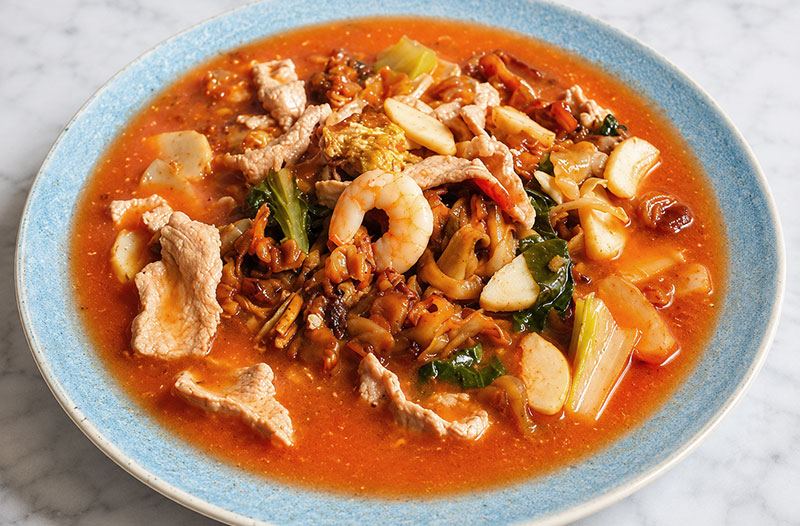
Mee Tomato, also known locally as Mee Dawai, is another popular noodle dish found around Kuching and other towns in Sarawak. The nickname “Mee Dawai” loosely translates to “wire noodles,” referring to the crispy texture and appearance of the noodles after being prepared. This unique Sarawak noodle dish is believed to have evolved from the classic Cantonese-style Kung Fu Chow noodles, but with a strong tomato-based twist that gives it a completely different flavour profile.
The noodles are first deep-fried until crispy, then topped with a thick tomato gravy cooked with chicken or pork slices and vegetables. The result is a combination of crispy and soft textures once the gravy soaks into the noodles. For many Malaysians, Mee Tomato is quite easy to enjoy because the flavours are somewhat similar to those of sweet and sour dishes commonly found in Chinese cuisine. The secret to a really good plate of Mee Tomato lies in the tomato gravy itself, which should have a perfectly balanced consistency — not too watery and not overly thick. Visitors can usually find this dish at local hawker centres, coffee shops, and restaurants throughout Sarawak.
 |
| The lobster noodles in Foochow style. |
 |
| One of the well-known Kampua Noodles in Sibu. |
Kampua Noodles is one of the most popular Foochow noodle dishes found in Sibu, where the Foochow community has a strong cultural and culinary influence. While you may occasionally find Kampua Mee in places like Kuching or Miri, the best and most authentic versions are still commonly associated with Sibu itself. For many Sarawakians, Kampua Mee is considered a comfort food that is simple, affordable, and full of flavour.
The dish is usually made with springy handmade noodles tossed with fragrant shallot oil, soy sauce, fried onions, and minced or sliced pork, though halal versions with chicken are also available. Compared to Kolo Mee, Kampua noodles tend to have a lighter texture and a slightly different flavour profile influenced by Foochow cooking traditions. During my travels around Sibu, I discovered that several coffee shops are famous for their own version of Kampua Mee, and locals often passionately debate which stall serves the best bowl in town. Exploring and comparing different Kampua noodle stalls around Sibu is honestly part of the fun when visiting this central Sarawak city.
 |
| Kway Chap in Kuching. |
8. Kway Chap or Kueh Chap
Kueh Chap is easily one of the favourite noodle dishes among meat lovers visiting Kuching. This rich and hearty dish is commonly served with flat rice sheets in a dark herbal broth together with a variety of pork cuts, innards, tofu, boiled eggs, and other braised ingredients. While Kueh Chap can be found in several places around Kuching, locals will often tell you that finding a really good bowl is not always easy, as every stall has its own style and flavour.
Over the years, I have tried several versions of Kueh Chap around Kuching, and honestly, many of them were just average. For a truly satisfying bowl, it is usually best to ask local foodies who know where the better stalls are hidden. Many locals have recommended different places to me over time, but one of the more reliable spots I still enjoy is at the Temple Street Food Court near Carpenter Street. While the price may not be the lowest, the flavour and quality are generally quite good and worth trying when exploring Kuching’s Sarawak noodles.
 |
| Mee Cangkuk Manis is usually mee hoon noodles, fried with the cangkuk manis vegetable. |
 |
| A Halal version of the Kolo Mee Goreng in Kuching. |
 |
| One of the interesting Foochow fried noodles in Kuching. |
 |
| Marudi Kuay Tiaw or Kuey Teow, which I tried at a stall in Miri. |
2. Marudi Kuay Tiaw (Kuey Teow)
Marudi Kuay Tiaw is one of the more unique noodle dishes I discovered while exploring Sarawak, and it immediately caught my attention because it looks familiar yet tastes completely different from the usual fried kuey teow dishes found elsewhere in Malaysia. What makes this dish especially interesting is that it is not easy to find outside the small town of Marudi, and even in larger cities like Miri, only locals usually know where to find a good plate of it.
The main feature that makes Marudi Kuay Tiaw special is the thickness of the flat rice noodles. Unlike the thinner kuey teow noodles commonly found around Malaysia, these noodles are almost double the thickness, giving them a much chewier and heavier texture. It may sound simple, but the difference in texture completely changes the overall eating experience. If you truly want to experience the original version, locals will tell you that visiting Marudi itself is the best way to enjoy this unique Sarawak noodle dish. The version I first tried was from a small house stall in Miri, and ever since, visiting Marudi to try the authentic version has been on my food travel list.
 |
| The 75-year-old handmade Lo Shu Fen noodles in Miri. |
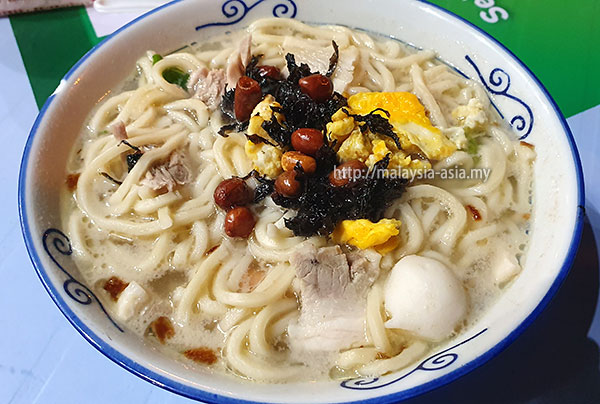
 |
| A typical menu from a local Foochow stall in Kuching. |
For the record, I also did a specialised Kuching food review using a Samsung Galaxy Note 10 Plus back in 2019, featuring some of the more distinctive local dishes around the city. The experiences shared above are based on my real travels throughout Sarawak over the years, where I explored not only the major cities but also many smaller towns, villages, and upriver communities across the state.
One thing I always make a point of doing while travelling in Sarawak is trying the local food unique to each area, especially the many different noodle dishes found throughout the region. From famous dishes like Sarawak Laksa and Kolo Mee to lesser-known local specialities hidden in towns such as Sibu, Miri, and Marudi, there is still so much more to discover. I hope this article on the 15 Sarawak Noodles You Have To Try gives fellow food lovers and travellers a better idea of the incredible noodle culture found across Sarawak.
Share this content: