
Rainforest World Music Festival 2026 Complete Guide
Regenerations: Roots & Rhythms
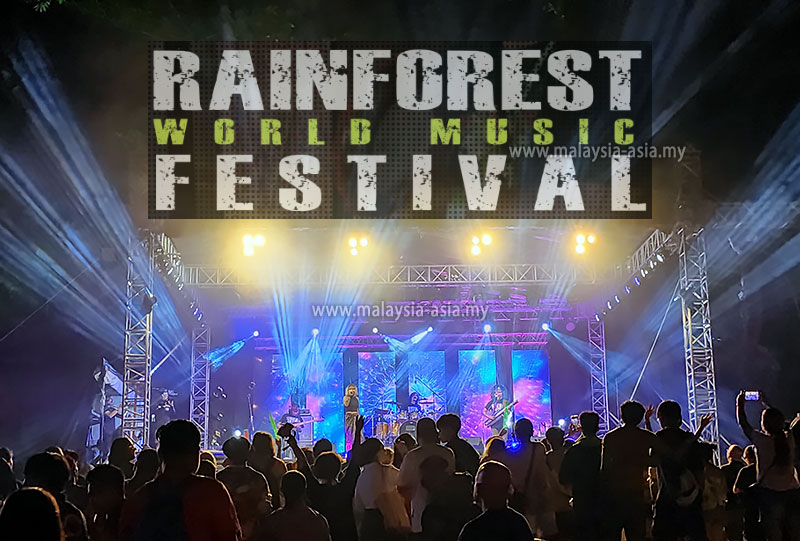
There are music festivals, and then there is the Rainforest World Music Festival. RWMF 2026 — the 29th edition of this celebrated annual event — returns to the iconic Sarawak Cultural Village in Santubong, Kuching, from 26 to 28 June 2026. Set against the dramatic backdrop of Mount Santubong, this is the only music festival in the world where you dance under towering rainforest trees inside a living cultural museum.
I have been writing about RWMF on MalaysiaAsia since 2010, and every year I am reminded of why this festival is different from anything else on the global calendar. It is not about big pyrotechnics or VIP lounges. It is about sitting inside an Iban longhouse listening to a musician from Siberia play throat-singing, then wandering out to watch a Sarawakian trio honour their ancestral lands, and later grooving to a soul-funk legend under the stars with thousands of people from all over the world beside you. That is the magic of RWMF.
This year’s theme of “Regenerations: Roots & Rhythms” is particularly meaningful as the festival approaches its 30th anniversary in 2027. The 2026 edition promises to be one of the most ambitious yet, with multiple performers worldwide.
The festival has recently been ranked No. 8 on the Transglobal World Music Chart’s Top 10 Festivals list, a distinction that cements its place among the world’s elite music events. And yet, what makes RWMF truly special is that it has never lost its soul. It remains rooted in Sarawak’s extraordinary cultural heritage while welcoming the world’s most exciting musical traditions.
The 2026 Headliners
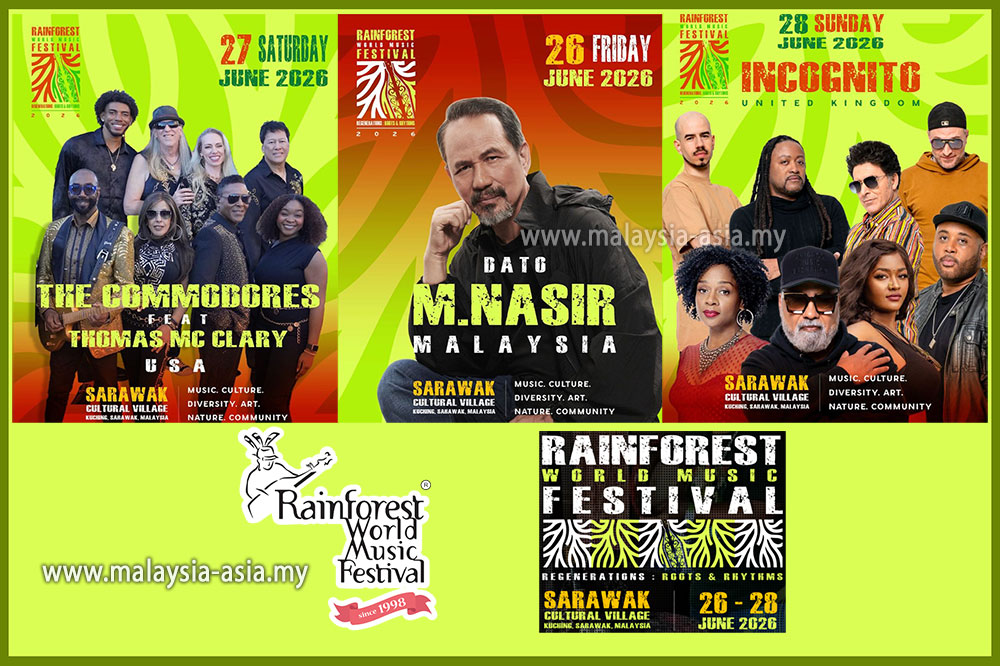
Each of the three festival nights is anchored by a headline act on the Rainforest Stage. The 2026 trio spans nearly five decades of musical legacy, from Malaysian cultural royalty to American funk legends to British acid jazz royalty. Doesn’t get any better.
Often referred to as the “Sifu” of Malaysian music, M. Nasir is one of Southeast Asia’s most respected musical icons. A singer, songwriter, composer and producer with over four decades of influence, his works weave traditional Malay and Nusantara elements into contemporary sound. Opening night does not get more significant than this.
One of the defining bands of the funk and soul era, The Commodores’ timeless catalogue — Easy, Three Times a Lady, Brick House — continues to resonate across generations. Founder Thomas McClary brings the full experience to the RWMF stage for a night of pure groove.
Led by founder Jean-Paul “Bluey” Maunick, Incognito are pioneers of the acid jazz sound with a catalogue spanning soul, funk and world rhythms. Known for Always There and Still a Friend of Mine, they are the perfect closing act for a festival built on the joy of global musical connection.
Performers From Across the Globe
Beyond the headline trio, RWMF 2026 will feature an extraordinary cast of performers spanning from all over the world, including Spain, South Korea, France, the Philippines, Mongolia, China, Uzbekistan and Thailand.
More artists will continue to be announced in the weeks leading up to the festival. Check rwmf.net/performers for the full, updated lineup.
Day 1 – Friday (26 June 2026)
6:00 PM – Miring Ceremony
6:15 PM – Straw Lim (Sabah) – Magic Hour Performance
6:55 PM – Drum Up (Philippines) – Drum Call
7:30 PM – Korrontzi (Basque Country, Spain)
8:20 PM – Insun Park & Generals (South Korea)
9:10 PM – Ta’Dan (Sarawak)
9:55 PM – Benin International Musical (Benin & France)
10:45 PM – Dato’ M. Nasir (Malaysia) ⭐ Headliner
Day 2 – Saturday (27 June 2026)
6:15 PM – Akasha (Malaysia) – Magic Hour Performance
6:55 PM – The Thunder Beat of Nanyang Wushu Drums (Sarawak) – Drum Call
7:30 PM – Straw Lim (Sabah)
8:05 PM – Drum Up (Philippines)
8:50 PM – Sambasunda (Indonesia)
9:35 PM – Namgar (Mongolia & Japan)
10:20 PM – The Commodores feat. Thomas McClary (USA) ⭐ Headliner
Day 3 – Sunday (28 June 2026)
6:15 PM – Ta’Dan (Sarawak) – Magic Hour Performance
6:55 PM – Drum Up (Philippines) – Drum Call
7:30 PM – Suk Binie (Sarawak)
8:05 PM – Fergana Cultural Group (Uzbekistan)
8:40 PM – Asia7 (Thailand)
9:25 PM – Akasha (Malaysia)
10:15 PM – Incognito (UK) ⭐ Headliner
Quick Observations
- Drum Up appears all 3 days (festival staple energy act)
- Straw Lim, Akasha, and Ta’Dan appear on multiple days
- Each night builds up to a major international headliner
- Mix of Borneo, ASEAN, and global acts reflects RWMF’s diversity
“The Rainforest World Music Festival has, for many years, stood as one of Sarawak’s most distinctive cultural celebrations. It is more than a music festival; it is a gathering of cultures, a meeting of artistic traditions.”
— YB Dato Sri Abdul Karim Rahman Hamzah, Minister of Tourism, Creative Industry & Performing Arts, Sarawak
Workshops: The Heartbeat of RWMF
If the evening concerts are the main event, the daytime workshops are RWMF’s best-kept secret, and where the festival truly sets itself apart from any other music event in the world. With over 50 workshops, cultural demonstrations and intimate mini-sessions spread across the festival grounds, the days are just as rich as the nights.
Inside the traditional longhouses and ethnic homes of the Sarawak Cultural Village, performers become teachers. You might find yourself learning to play the sape, Borneo’s beloved lute, or joining a drum circle, learning Maori movement, or simply sitting on the floor of an Orang Ulu house as a musician explains the spiritual meaning behind their instrument. There are no barriers here: performers walk freely through the grounds all day, and many love a conversation.
What to Expect at the Workshops
Workshops run on a first-come, first-served basis throughout the day at various traditional houses across the 17-acre village grounds. They are free and open to all ticket holders. Sessions typically last 30 minutes and include ethno-musical talks, interactive instrument lessons, dance sessions, impromptu jam sessions and cultural demonstrations. The atmosphere is completely relaxed — you can come and go as you please, and it’s perfectly fine to just sit and watch.
My strong advice: arrive early in the morning when the grounds open. The best workshop spots fill up quickly, and exploring the cultural village itself, with its unique Iban longhouses, Bidayuh roundhouse, Melanau Tall House, Orang Ulu dwelling, Malay and Chinese homes, is a full experience in itself before a single note is played.
New for RWMF 2026: Food, Flavour & Legacy
The 2026 edition introduces a standout new addition to the festival experience — the BIMP-EAGA Gastronomy Showcase. Representing the Brunei-Indonesia-Malaysia-Philippines East ASEAN Growth Area, this culinary showcase brings together food partners from across the Borneo sub-region to present traditional dishes and regional specialities alongside the music. Think Brunei ambuyat, Indonesian rendang, Filipino lechon and Sarawakian laksa all in one place.
The food scene at RWMF has always been one of its underrated highlights — from the extensive main food court with 20+ local and international options, to the Sarawakian Ethnic Food corner near the Bidayuh House, and the Damai Food Court just outside the village gates. The BIMP-EAGA showcase adds a whole new cultural dimension to the eating experience this year.
This edition also marks a significant milestone in the festival’s sustainability journey (see the green section below), with a target of 10,000 trees planted ahead of the 2027 anniversary — a goal now expected to be reached during the 2026 festival itself.
Tickets for RWMF 2026
Tickets went on sale on 13 March 2026, with Early Bird pricing available. Book through the official festival website, rwmf.net, or the official ticketing platform, Ticketmelon.
| Ticket Type | Price | Notes |
|---|---|---|
| 3-Day Pass (Adult) | RM 635 | Early Bird rate — best value, covers all 3 nights + all workshops |
| 1-Day Pass (Adult) | RM 235 | Early Bird rate — choose any single day |
| Child Pass (4–12 years) | RM 80 | 3-day access for children |
| Children under 3 | Free | No ticket required |
Buy Now Pay Later options are available via Atome, GrabPayLater and ShopeePaylater — making it easier to plan ahead without paying the full amount upfront. Bulk purchase discounts are also available.
Important note: tickets for single days are worth buying even if you only have a limited time. With over 50 workshops during the day and a full evening concert programme, a single day at RWMF is still an incredibly complete experience.
How to Get to RWMF 2026
Flying into Kuching
Kuching International Airport is the gateway to RWMF. From Peninsular Malaysia, direct flights are available from Kuala Lumpur (KL Sentral/KLIA and KLIA2) via Malaysia Airlines, AirAsia, Batik Air and Firefly. Regional connections include Scoot from Singapore. International visitors should check for direct flights to Kuching, as routes continue to expand each year. Book early: flights to Kuching during RWMF weekend book out months in advance.
International visitors: remember to complete the Malaysia Digital Arrival Card (MDAC) at least three days before arrival at Kuching International Airport.
Kuching to the Sarawak Cultural Village
The Sarawak Cultural Village in Santubong is approximately 35 km from Kuching city, about 45 minutes to one hour by road. The best option for most festival-goers is the official RWMF shuttle bus service, which is free for ticket holders. Shuttle buses run hourly from two pick-up points in Kuching city (historically near the Holiday Inn Kuching and the Waterfront area), operating from around 9 AM through to 1 AM. The return drop-off and pick-up point at the festival is the Damai Central Parking Area, outside the Sarawak Cultural Village entrance.
If you drive or use Grab, note that all private vehicles and ride-hailing cars must stop at a designated checkpoint near Santubong Junction. From there, an official shuttle van ferries you for the final stretch to the Cultural Village (a small fee applies for the van if you are not on the main shuttle). This is important to know in advance — plan accordingly to avoid confusion late at night after the concerts.
Accommodation for RWMF 2026
Book as early as possible. Hotels in Kuching city and all properties around the Santubong peninsula typically fill up months in advance for the RWMF weekend. There are three main accommodation zones to consider:
The festival’s “home base” resort, where performers and media stay. A minute’s walk to the Cultural Village. Multiple pool types, beachside location, rooms from standard to chalets. Books out first; reserve 6+ months ahead.
Treehouses on stilts, jungle cabins and a campsite. Perfect for nature lovers — expect cheeky proboscis monkeys on your balcony. A budget campsite option is also available. Adventure activities (kayaking, flying fox, Santubong hike) on-site.
Hilton Kuching, Pullman Kuching and The Waterfront Hotel offer the most amenities and dining. Use the free festival shuttle. More room availability than Santubong, but factor in transport time after the late-night concerts.
LimeTree Hotel and Tune Hotel are solid budget picks in Kuching. Airbnb homestays in the Damai area offer a cultural touch. Homestays near the Cultural Village fill up just as fast — book early.
Camping at SCV: For the adventurous, the Sarawak Cultural Village itself allows camping on-site — the cheapest possible option, and you’ll wake up inside the festival grounds. Bring your own tent, or rent one. Best to confirm pricing directly with the organisers as rates change yearly.
Tips for First-Timers (and Regulars)
After attending RWMF since 2010, here are the things I wish someone had told me before my first visit — and a few reminders I still give myself every year:
- Book early, everything. Flights, accommodation and tickets. This is not a festival where you show up last-minute. Hotel rooms within 10 km of the Cultural Village disappear months before the event.
- Bring a poncho or rain jacket. June in Borneo is the pre-monsoon season and tropical downpours are common. The concerts happen rain or shine — and there is something magical about dancing in the rain under the canopy. Pack light, breathable clothing and a small umbrella.
- Mosquito repellent is essential. You are literally in a rainforest. Pack a good DEET-based repellent. The evenings, especially when you are sitting in the open field before the main stage, can be mosquito territory.
- Pack light and carry one bag. Bags are searched at the entrance. Outside food is not permitted. You can bring a refillable water bottle — free water refill stations are available inside. Keep valuables minimal.
- Arrive early in the morning. The workshops start midday, but getting there early gives you time to explore the Cultural Village itself — one of the world’s most impressive living museums — before the music begins. The ethnic houses, cultural demonstrations and crafts displays are worth a full morning.
- Bring a picnic mat or folding stool. The main stage area is an open field. Having a comfortable place to sit while waiting for the headliners makes the evening far more enjoyable. Most regulars know this trick.
- Use the official shuttle bus. Sorting your own transport back to Kuching at midnight, after a concert crowd of 20,000+ has just dispersed, is stressful. The shuttle is free for ticket holders and worth the wait. Plan for queues — especially after the headliner.
- Bring cash and cards. Food stalls and craft vendors accept cash and cards. Having both means you never miss that one artisan selling handmade sape earrings or a cold Tiger beer at exactly the right moment.
- Engage, not just photograph. The workshops are where the real memories are made. Put the camera down occasionally, join a drum circle, ask a musician about their instrument, let the music move you. RWMF rewards open-mindedness above all else.
RWMF’s Green Commitment
Sustainability has been woven into the DNA of the Rainforest World Music Festival for years, and 2026 marks a significant milestone. The festival’s Green Ruai eco-educational space, the Green Warriors volunteer programme, and the EcoGreen Planet tree-planting initiative have collectively planted over 6,000 trees since 2023 in conservation areas, including Samunsam Wildlife Sanctuary, Bukit Lima Nature Reserve and Piasau Nature Reserve. The 2026 festival is expected to hit the 10,000-tree target — ahead of the original 2027 goal.
On the ground, waste segregation systems, BYOB water refill stations, solar-powered lighting and composting technology — developed by the Sarawak Tourism Board’s own innovation team — make RWMF one of the most climate-conscious music festivals in Southeast Asia. The festival is a genuine demonstration of what responsible, regenerative tourism looks like.
Food at RWMF 2026
The food scene at RWMF is genuinely excellent and always improving. Inside the festival grounds, a main food court tent offers 20+ varieties of local and international food. Scattered around the Cultural Village are ethnic food corners — the Sarawakian Ethnic Food section near the Bidayuh House is a must-visit for traditional local flavours.
Just outside the Cultural Village gates at Damai Central, there is another full food court with additional options. The Sarawak Cultural Village’s own restaurant near the indoor theatre is also worth a visit if you arrive early in the day.
New for 2026: The BIMP-EAGA Gastronomy Showcase brings together culinary traditions from Brunei, Indonesia, Malaysia and the Philippines in one dedicated space — a first for the festival and an exciting addition for food lovers.
Alcohol is available at designated stations inside the festival grounds (18+ only). Water refill stations are free and plentiful — bring your own bottle.
From 300 Attendees to a World-Class Festival
The story of RWMF begins in 1997, when Canadian musicologist Randy Raine-Reusch visited Robert Basiuk, then Deputy CEO of the Sarawak Tourism Board. Randy was researching ethnic music — particularly the sape, the lute of the Kayan and Kenyah peoples of Borneo. Together, they envisioned an annual world music celebration rooted in Sarawak’s extraordinary cultural heritage.
To test the idea, local musicians were taken to the World Music Expo (WOMEX) in Marseille, France. Their sape performance reportedly moved hardened European music industry veterans to tears. The proof of concept was undeniable. In March 1998, the Sarawak Tourism Board approved funding for the first festival, with Society Atelier Sarawak providing vital logistical support.
That first edition drew just a few hundred visitors. By the 2010s, the RWMF was pulling tens of thousands of attendees from across the globe and earning recognition in Songlines magazine’s Top 25 International Festivals for six consecutive years (2010–2015). The PATA Heritage & Culture Gold Award, multiple ASEAN tourism awards and now a Top 10 global festival ranking from the Transglobal World Music Chart have followed.
Through COVID-19 — which forced the cancellation of the 2020 and 2021 editions — RWMF emerged stronger. The 2022 comeback was electric. The 2023 and 2024 editions built momentum. The 2025 edition, with Earth, Wind & Fire headlining, broke records. And now, the 29th edition in 2026 sets the stage for what promises to be a landmark 30th anniversary celebration in 2027.
I have attended RWMF regularly since 2010 and have watched this festival evolve from a beloved niche world-music gathering into a truly international cultural institution — without ever losing the intimacy and authenticity that makes it unlike anything else on Earth.
Make the Most of Kuching
If you are flying in for RWMF, give yourself a few extra days in Kuching — Sarawak’s capital has a lot to offer. The Sarawak Cultural Village is worth a standalone visit before the festival to better understand what to expect during the event. The Sarawak Cultural Village — a 17-acre living museum at the base of Mount Santubong — is one of the finest cultural attractions in all of Southeast Asia.
In Kuching itself, the Borneo Cultures Museum (formerly the Sarawak Museum) is world-class. The Kuching Waterfront is perfect for an evening stroll and traditional seafood. The main bazaar and Carpenter Street are good for souvenirs, local food and atmosphere. For nature, Bako National Park (proboscis monkeys, pitcher plants, dramatic sea cliffs) is a day trip well worth making.
Why You Should Go to RWMF 2026
I have attended music festivals around Asia over the years, and nothing compares to RWMF. It is not the biggest. It is not the loudest. It does not have the most famous names. What it has is something rarer: soul. It has the irreplaceable feeling of sitting in an ancient rainforest as the sun sets behind Mount Santubong, listening to music from the other side of the planet, surrounded by thousands of people who all chose to be in exactly this one extraordinary place.
The 29th edition in 2026 — with its theme of One Earth, One Love, One Unforgettable Legacy — feels like a statement. RWMF knows what it is, and it is getting better at being it. The headliners are strong. The supporting cast is global and genuinely exciting. The BIMP-EAGA food showcase adds a new layer. The sustainability work is real and ongoing. And the workshops — always the workshops — remain the festival’s irreplaceable gift to anyone who shows up with an open heart.
Do not wait. Book your flights, book your accommodation, and get your tickets. The rainforest is calling.
Thanks for visiting my site and this article on the Rainforest World Music Festival 2026 complete guide. Have a fantastic time if you’re headed there and remember to spend some extra days around Kuching or in Sarawak.
Share this content: