
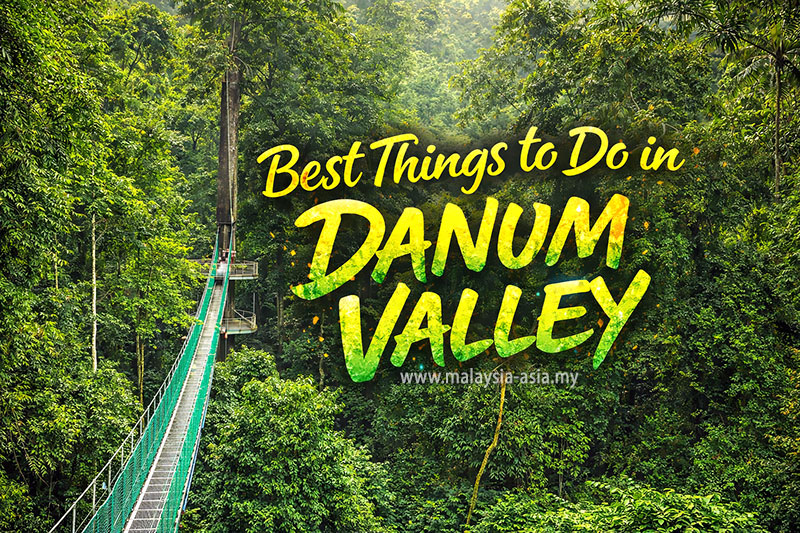
Best Things to Do in Danum Valley, Sabah (The Complete Guide)
Let’s be honest, Sabah has no shortage of incredible natural destinations. Mount Kinabalu, the Kinabatangan River, and Sipadan Island. But if you ask anyone who’s been to Danum Valley, they’ll tell you something shifts the moment you step into that centuries-old rainforest. It’s a different kind of wild. Older. Quieter. More intense, and more real.
Danum Valley Conservation Area covers 43,800 hectares of pristine lowland dipterocarp rainforest in southeast Sabah. This forest has remained largely untouched for over 130 million years, making it possibly older than the Amazon. At its heart sits the Borneo Rainforest Lodge (BRL), the crown jewel of jungle stays in Malaysia and the main base for experiencing everything Danum Valley has to offer.
This guide covers everything you need to plan your trip, which includes activities, accommodation, getting there, what to pack, and answers to the questions most people have before they go. And just so you know, I have been here twice in the span of 10 years as a visitor; therefore, all the information here is my personal experience.
About Danum Valley
The Danum Valley Conservation Area is one of the last remaining pockets of truly untouched lowland dipterocarp forest on Earth. It is classified as a Class 1 (Protection) Forest Reserve under the Sabah Forestry Enactment — the highest level of protection a forest can receive in Malaysia — which means no logging, no clearing, and no permanent human settlement.
The result is a rainforest of extraordinary ecological depth. Scientists still regularly discover new species here. The forest floor alone contains over 200 plant species per hectare. The canopy in places reaches 70 metres high. And one tree — the Yellow Meranti known as “Menara” — stands at 100.8 metres tall, making it one of the tallest tropical trees ever recorded on Earth.
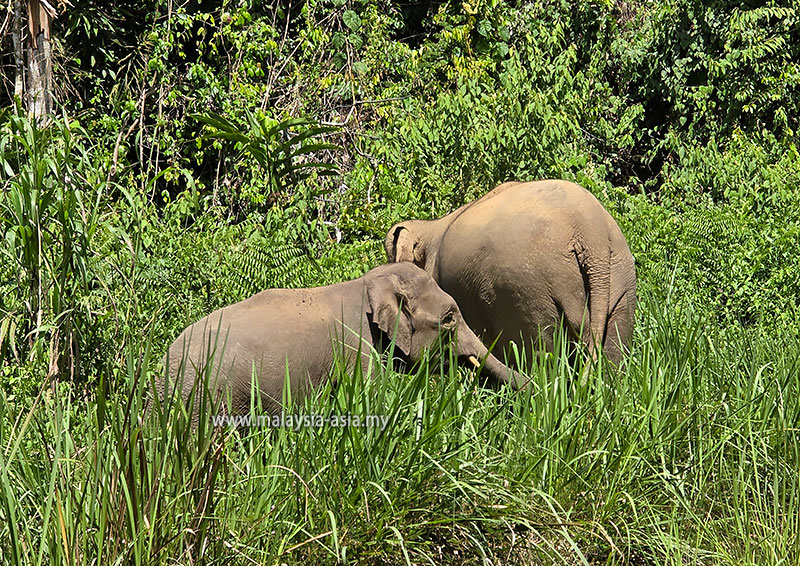
Wildlife-wise, the numbers speak for themselves: over 340 species of birds, 124 species of mammals, 72 species of reptiles, and 56 species of amphibians. Among them are some of the world’s most iconic and endangered animals: the Bornean Orangutan, the Bornean Pygmy Elephant, the Clouded Leopard, the Proboscis Monkey, and the Sun Bear.
What makes Danum different from other wildlife destinations is the sheer wildness of it all. These animals aren’t habituated to humans. They haven’t been fed or relocated for tourist convenience. When you encounter them here, you’re seeing them on their own terms, in a forest that belongs to them, and that distinction matters more than most people realise until they’re standing in it.
About Borneo Rainforest Lodge
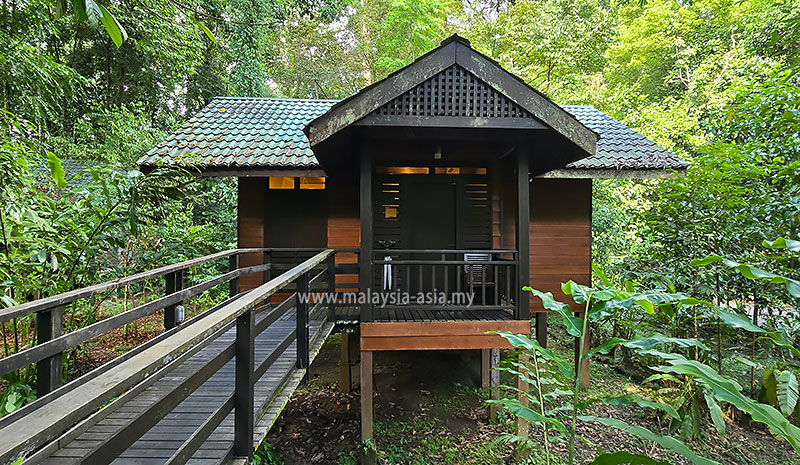
Built in 1994 and perched alongside the Danum River, the Borneo Rainforest Lodge is an award-winning eco-resort that somehow manages to be both luxurious and deeply rooted in conservation. It sits entirely within the conservation area — meaning you wake up in a 130-million-year-old forest, not on its fringes. The lodge has hosted some remarkable guests over the years, including Prince William and Princess Catherine, Dame Judi Dench, and Sir David Attenborough.
The lodge accommodates up to 60 guests at a time across 31 individual chalets, a deliberate choice to minimise impact and keep the experience intimate. All stays are on a full-board basis, with guided activities, meals, and transfers from Lahad Datu included in the package. You don’t need to think about logistics once you’re here, which is exactly the point.
The nearest town, Lahad Datu, is about 97km away, a 2 to 2.5-hour drive on a mix of sealed road and gravel logging roads. Flights to Lahad Datu run daily from Kota Kinabalu via MASWings (now AirBorneo). The BRL lodge handles your transfer from there.
Best Things to Do in Danum Valley
1. Walk the Canopy Walkway
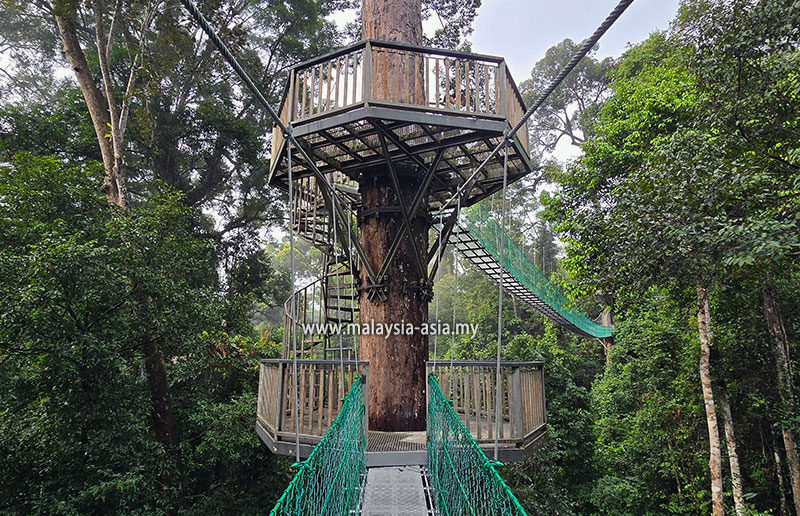
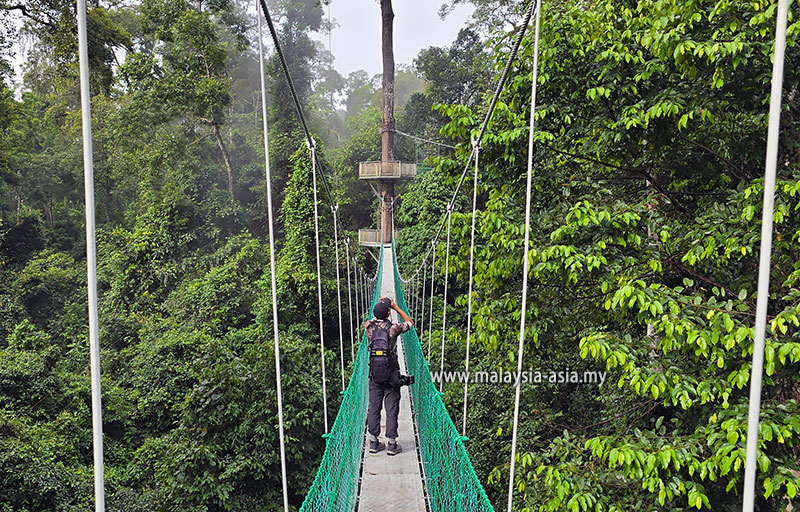
This is the one that gets everyone talking. The Danum Valley Canopy Walkway is a 360-metre suspension bridge system that rises 27 metres above the forest floor, featuring multiple viewing platforms at varying heights and offering a full 360-degree panorama of one of the world’s most ancient rainforest canopies.
From up there, everything looks different. The scale of the trees hits you. You start spotting things you’d never see from the ground — hornbills gliding between emergent trees, the flash of a Violet Cuckoo, the occasional rustle of an orangutan swinging into view. It’s not a leisurely stroll (there’s some swaying involved), but it’s one of those experiences that stays with you long after you leave.
Go early in the morning for the best wildlife activity and the soft golden light through the canopy.
2. Birdwatching
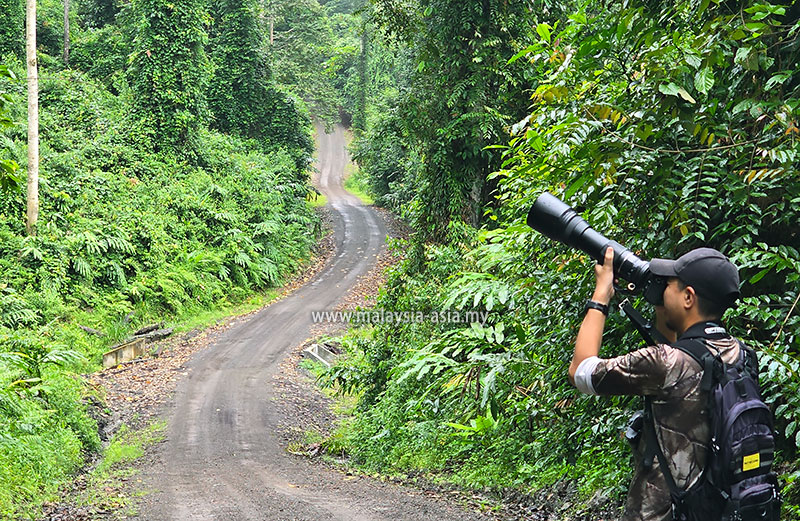
For birders, Danum Valley is practically a pilgrimage site. The conservation area is home to over 340 bird species, representing nearly three-quarters of the resident birds on the entire island of Borneo, and it’s been officially designated as an Important Bird Area (IBA MY24). That’s not marketing speak — it’s why serious birders from around the world make the trip specifically for this.
The holy grail here is the Bornean Bristlehead, one of the most sought-after birds in Southeast Asia. Danum Valley is one of the best places on Earth to spot it. On my last visit here in 2025, I managed to spot one of the four endemic pittas (Blue-headed, Black-crowned, Blue-banded, and Bornean Banded), the White-fronted Falconet, Pale Blue Flycatcher, and various wren-babblers that are next to impossible to find elsewhere. On top of that, I had an amazing encounter with the Great Argus, mere metres in front of me on a trail.
If birdwatching is your primary purpose, ask specifically for a birdwatching package when booking. It costs more than the standard package but assigns you a specialist bird guide, and the difference is enormous. For avid birders, read my other article about birdwatching at Danum Valley.
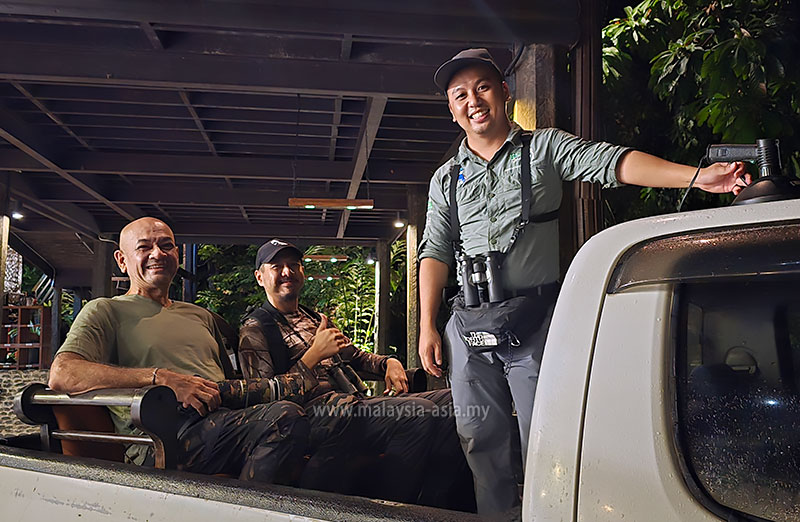
3. Night Drive Safari
One of the more surreal experiences in Danum Valley happens after dark. Every evening, guests climb into 4WD vehicles for a guided night drive along the access road, where a high-powered spotlight sweeps the trees and forest edge in search of nocturnal life.
Civets, sambar deer, slow loris, western tarsiers with their enormous reflective eyes, flying squirrels, and — on a very good night — the elusive clouded leopard. The forest at night is a completely different world, and watching the guides pick out creatures in complete darkness with practised ease is quietly impressive. There’s also a night walk option closer to the lodge for a more intimate, on-foot experience.
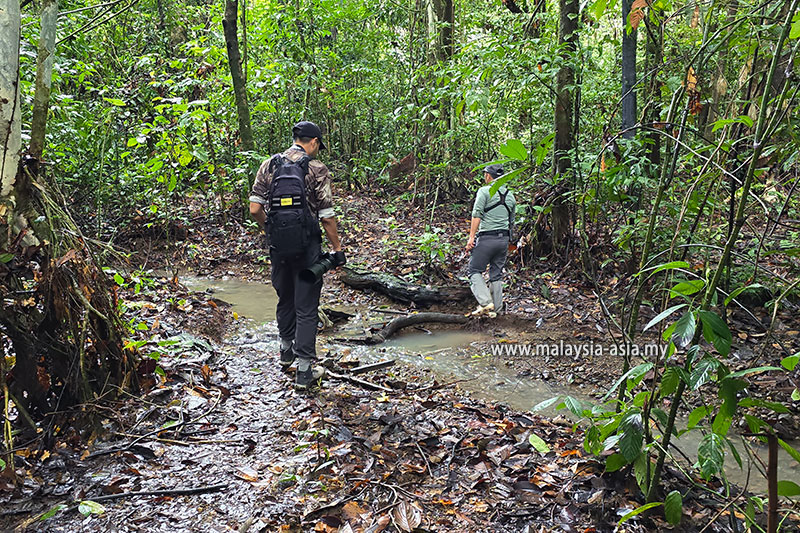
4. Jungle Trekking and the Coffin Cliff Trail
The trail network around the lodge is extensive and varied, catering to different fitness levels. The signature daytime trek is the hike up to Coffin Cliff. On this ancient Kadazandusun burial site, wooden belian coffins have been set into the cliff face overlooking the Danum River. It’s a physically demanding climb (some guests find it challenging, but most manage it), and the place’s cultural and historical weight makes it genuinely moving to visit.
From the viewpoint near Coffin Cliff, you get a sweeping bird’s-eye view of the entire valley, the river snaking below, the lodge nestled among the trees, and the forest stretching out in every direction with no break in sight. On the way back down, there’s a natural jacuzzi pool — a shallow, clear jungle stream — perfect for a cool-down dip before lunch.
5. Fairy Falls and Serpent Falls
If you’re staying for three nights or more, Fairy Falls is worth the effort. The hike takes you deeper into the primary forest, past enormous dipterocarp trees and through thick vegetation, before opening out at a beautiful jungle waterfall. It’s the kind of place that feels completely removed from the modern world, and the trail itself is as rewarding as the destination.
Serpent Falls is often done on the same day, and combined with the panoramic viewpoint near the falls, it makes for one of the more memorable full-day treks in the valley. (Note that some hikes are not meant for everyone, so please check with your in-house nature guide about the conditions.)
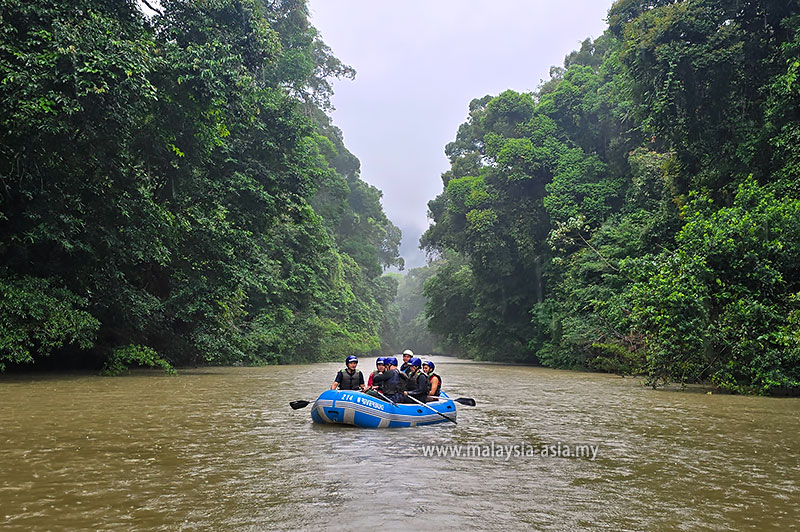
6. River Rafting on the Danum River
Weather and conditions permitting, floating down the Danum River is one of the highlights of any stay. From April 2026 onwards, the popular river tubing activity has been upgraded to river rafting along the Danum River, which promises to be an equally rewarding — and more exciting — way to experience the river up close.
The Danum River is crystal clear, the forest hangs over the water on both sides, and the chance of spotting wildlife along the banks — macaques, hornbills, monitor lizards — is high. It’s a wonderful contrast to the intensity of jungle trekking.
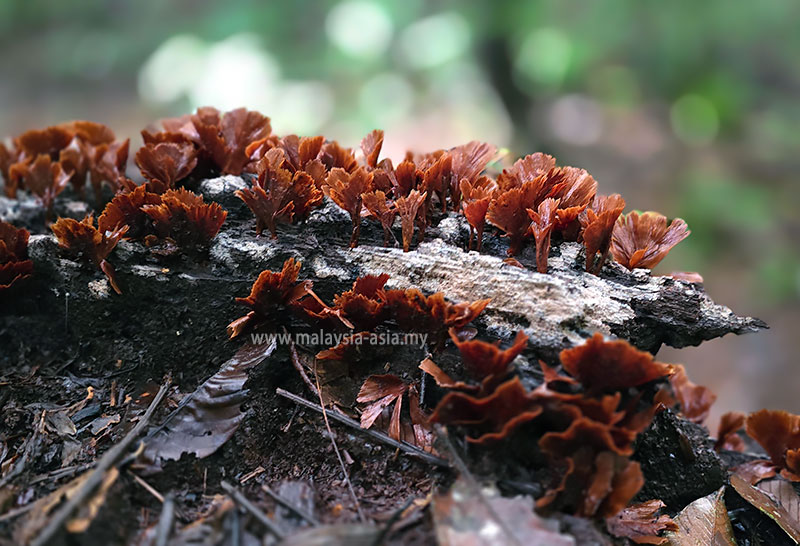
7. Mycology and Fungi Spotting
This one might surprise you, but Danum Valley is a mycologist’s dream. The forest floor and fallen timber are home to a staggering diversity of fungi — from glowing bioluminescent species that light up the night walk trail to elaborate bracket fungi and vibrant mushrooms in every shade imaginable.
The guides at BRL are knowledgeable about the forest ecosystem as a whole, and fungi spotting has become an increasingly popular part of guided walks here. Night walks in particular offer the chance to encounter the famed glowing fungi — a genuinely magical sight when you come across a patch of soft green luminescence on a dark forest trail. If this interests you, let your guide know in advance.

8. Wildlife Watching
Even without a dedicated safari, wildlife is woven into every part of a stay at Danum Valley. The Bornean Orangutan, Bornean Pygmy Elephant, Clouded Leopard, Proboscis Monkey, Müller’s Bornean Gibbon, and Sun Bear all call this forest home. Sightings are never guaranteed — this isn’t a zoo — but Danum Valley gives you arguably the best odds of encountering these animals in truly wild, undisturbed habitat.
The early morning walks (some guests are up at 6 am) tend to yield the best orangutan sightings. Pygmy elephants are occasionally spotted near the river. Gibbons announce the dawn with their resonant calls most mornings without fail. Even if the bigger encounters don’t happen, the sheer density of smaller wildlife — tree frogs, hornbills, monitor lizards, forest insects of every conceivable form — keeps every walk interesting.
9. Spa and Wellness
After a few days of jungle trekking, the in-house spa becomes extremely appealing. BRL’s spa offers traditional Borneo-inspired massages and treatments, and many guests have specifically highlighted the massages as a highlight of their stay. For me, this was much needed, as I had been walking all over, doing my mandatory birding and mushroom hunting, for a few days. It’s a small but considered offering, not a five-star hotel spa, but exactly what you need after a demanding Coffin Cliff hike.
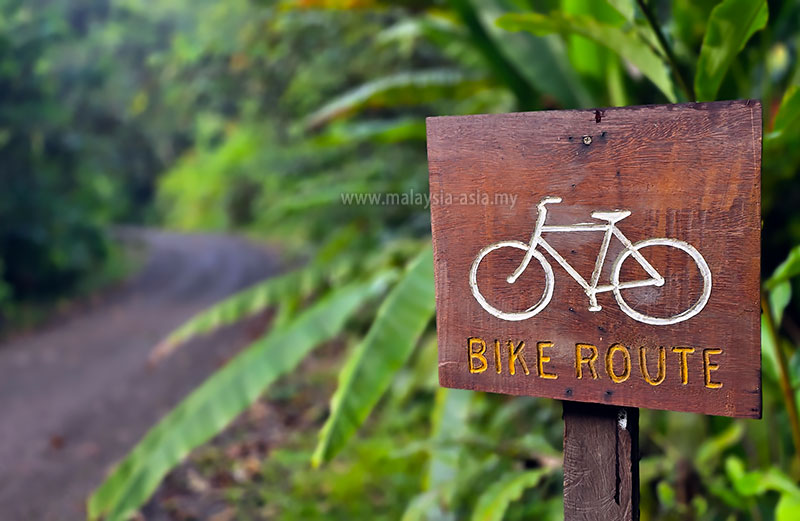
10. Cycling at Danum Valley
Cycling in Danum Valley offers a refreshing way to explore Borneo’s pristine rainforest at a relaxed pace. At the Borneo Rainforest Lodge, this is available as a guest activity, with cycling paths provided for visitors to enjoy the surrounding jungle. As you ride, you may spot hornbills overhead or hear gibbons calling in the distance, making it a relaxing yet immersive way to experience nature beyond the usual walking trails.
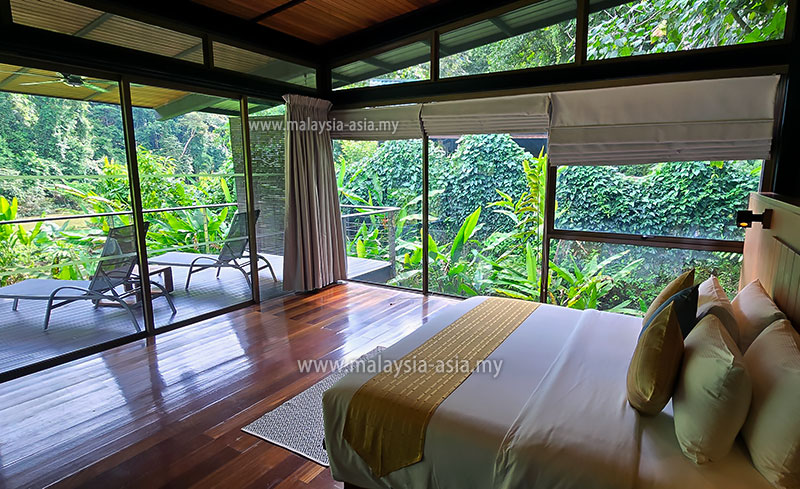
11. Do Absolutely Nothing (And Mean It)
Not everyone arrives with a checklist. Some people come to Danum Valley simply to stop — no notifications, no deadlines, no noise that didn’t come from the forest. I’ve personally met guests who stayed at BRL for over a month, not chasing wildlife or ticking off trails, just existing in the middle of one of the oldest rainforests on Earth. There’s no phone signal to tempt you back, and after a day or two, you stop missing it. If you’re looking for a place to switch off from the world genuinely, Danum Valley doesn’t just offer that — it quietly insists on it.
Where to Stay in Danum Valley
Accommodation options are limited by design — the conservation area isn’t open to mass tourism, which is part of what makes it so special.
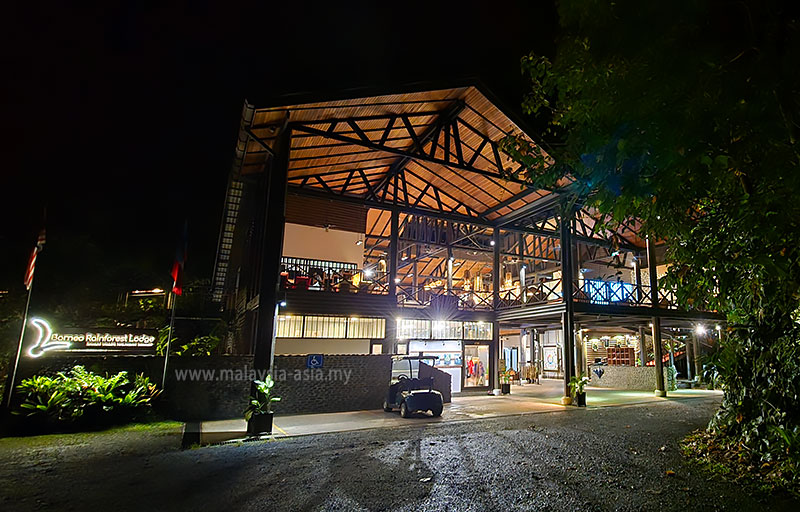
Borneo Rainforest Lodge (Luxury)
The flagship option and the only lodge situated deep within the Danum Valley Conservation Area itself. Chalets come in several categories:
- Jungle Chalet (Standard) — Comfortable rooms with an outdoor deck overlooking the forest, with fans and en-suite bathrooms.
- Deluxe Chalet — Larger rooms with air-conditioning and a private balcony, available in jungle or river view options. Some come with outdoor hot tubs.
- Premium Deluxe Chalet — Spacious rooms suitable for small families, with elevated views and premium finishes.
- Premium Villa — The top-tier option, strategically positioned for stunning river views with a private plunge pool or jacuzzi on the balcony. If you’re celebrating something, this is worth it.
All room types are connected by elevated wooden walkways, meaning you’re essentially moving through the treetops to get from your chalet to the restaurant. The lodge has 24-hour electricity, air-conditioning throughout, and a full-board buffet restaurant serving a wide range of local and Western dishes. All stays are booked as packages — minimum 3 Days / 2 Nights — with the 4D/3N package widely recommended as the sweet spot for time versus experience. Below is an estimated price per person;
- Jungle / Deluxe Chalet (entry level) – RM2,800 – RM4,500 per night (per person)
- Premium Deluxe – RM4,500 – RM6,000 per night
- Premium Villas (top tier) – RM6,000 – RM9,000+ per night
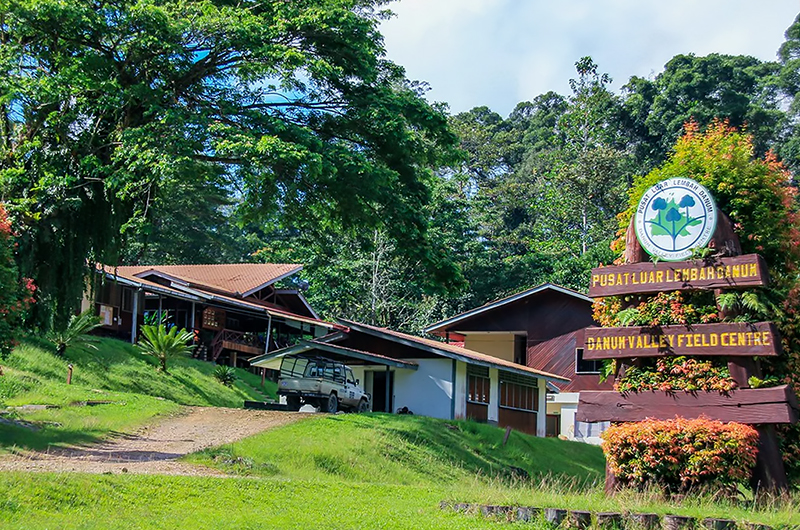
Danum Valley Study Centre / Field Centre (Budget)
The budget and research-oriented alternative is located within the conservation area, but in a zone of mixed primary and secondary forest. Originally built for scientists in 1986, it’s now open to independent travellers and nature enthusiasts. Accommodation ranges from air-conditioned Superior Deluxe Chalets and Deluxe Resthouses to standard rooms, dormitories, and campsites. Power shuts off at 11 pm and resumes at 7 am. It’s considerably more affordable than BRL. It’s not luxurious — think cold-water showers in the basic options — but access to the same ancient rainforest is real, and the price reflects that. Below is an estimated price per person;
- Barebones dorm style: ~RM600–700/night
- Comfortable private room: ~RM800–1,000/night
- Best available at DVFC: ~RM1,000–1,200/night
How to Get to Danum Valley
Getting to Danum Valley takes some planning, but the lodge handles most of the heavy lifting once you’ve booked. The key thing to understand up front is that all access to Danum Valley Conservation Area must be prearranged. You cannot simply drive in. Only registered vehicles with permits are allowed, and there are no public buses or ride-hailing services heading into the forest. Every visit is coordinated through your accommodation or a licensed tour operator.
Everything begins in Lahad Datu — a small town on the east coast of Sabah that serves as the only gateway into the valley.
From Kota Kinabalu (KK)
The fastest and most practical route. Fly from Kota Kinabalu International Airport (BKI) to Lahad Datu Airport (LDU) with MASwings — the flight takes approximately 55 minutes. Flights run daily. From Lahad Datu, the lodge or your tour operator will collect you for the overland transfer to BRL, which takes approximately 2 to 2.5 hours by 4WD.
If you prefer not to fly, the overland drive from KK to Lahad Datu covers around 450km and takes 8 to 10 hours — a very long day, though the route through Ranau and Sandakan, and along the east coast, is scenic.
From Sandakan
A popular option for travellers combining Danum Valley with Sepilok and the Kinabatangan River. MASwings operates short flights from Sandakan Airport (SDK) to Lahad Datu, with a flight time of approximately 45 minutes. Alternatively, Sandakan to Lahad Datu by road is about 3 to 4 hours along the east coast highway — more manageable than driving from KK.
From Tawau
If you’re coming from Semporna or Tawau after diving at Sipadan, private transfers can be arranged directly to Lahad Datu. The drive from Tawau to Lahad Datu takes approximately 2 hours on a well-maintained road. Confirm transfer arrangements with the BRL lodge or tour operator when booking.
From Kuala Lumpur
Fly into Kota Kinabalu, then connect to Lahad Datu on AirBorneo. Kota Kinabalu has frequent connections from KL and is the easier hub to reach. Total journey time from KL to BRL, including the overland transfer, is roughly 6-7 hours door-to-door.
Lahad Datu to Borneo Rainforest Lodge
The 97km journey from Lahad Datu to BRL takes approximately 2 to 2.5 hours. The first 15km follows the sealed Lahad Datu–Tawau highway before turning onto a gravel road that winds through regenerating forest and into the heart of the conservation area. The road is generally passable year-round but can be challenging after heavy rain. The lodge arranges all transfers as part of your package — you don’t need to organise this separately.
One tip: Before leaving Lahad Datu, ask your driver to stop at a local shop to pick up a pair of “adidas kampung” — the simple rubber-soled shoes locals wear for jungle trekking. They grip wet roots and muddy trails surprisingly well, and they’re cheap (around RM10-15 per pair). Many regular visitors swear by them over expensive hiking boots.
When to Go
Danum Valley is a rainforest, so it rains all year. But there are better and worse times to visit, and the difference is worth knowing.
March to October is generally the drier half of the year, with shorter, more predictable rain showers and higher overall wildlife activity. This is when fruiting trees attract primates, making orangutan sightings more likely. April, July, and August are peak months — the lodge fills up well in advance, so book early.
November to February brings heavier, more sustained rainfall. The trails can be muddier, leeches are more active, and some activities may be weather-dependent. That said, the forest is intensely lush during this period, crowds are thinner, and the atmosphere — misty mornings, thunderstorm evenings — is dramatic in the best way. For birders, migratory species pass through around September to November, making this an interesting window too.
The honest answer is that no time of year is a bad time to go. The forest is extraordinary in all conditions. Just pack accordingly and set your expectations around the season.
What to Pack
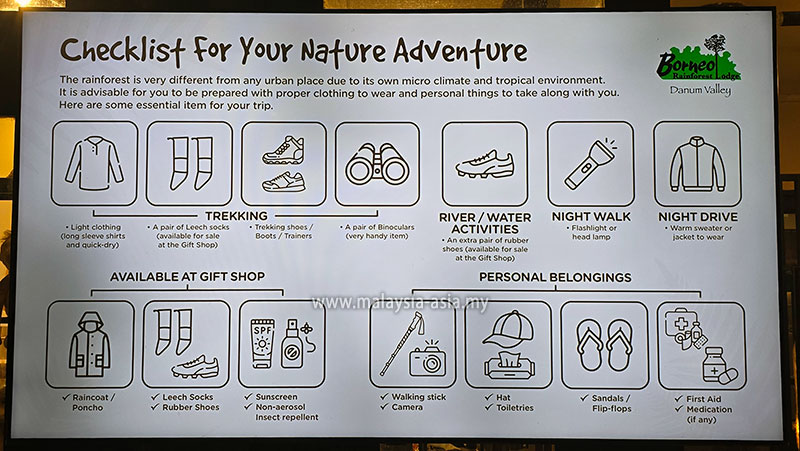
The lodge provides torches, binoculars, and metal water bottles, so you don’t need to bring any. But a few things will make a real difference to your comfort in the forest.
Clothing: Pack lightweight, quick-dry fabrics — cotton stays wet and stays wet. Long pants are recommended over shorts on the trails, as they offer some protection against leeches and sandflies. Avoid zip-off convertible pants; the zippers create entry points for leeches along the leg. Opt for tights or slim-fit trousers instead. A lightweight rain poncho is worth having, and a fleece or light layer for air-conditioned evenings in the restaurant.
Footwear: Sturdy, closed-toe trail shoes or hiking boots are the standard recommendation. Many guides actually recommend “adidas kampung” — basic rubber-soled shoes sold cheaply in KK, Tawau or Lahad Datu — as they grip well on wet roots and muddy trails. Bring sandals for around the lodge.
Leech Socks: Non-negotiable. Leeches are a reality of Danum Valley, particularly after rain. Leech socks are worn over your trousers and pulled up to the knee, creating a seal that stops leeches from reaching your skin. You can buy them in outdoor shops in Kota Kinabalu (Suria Sabah mall is a good bet) or Sandakan, or pick them up at the BRL gift shop — they sell a branded version which doubles as a souvenir. If you do get bitten despite all precautions, let reception know — they’ll issue you a “Blood Donor to the Tiger Leeches of Danum Valley” certificate. Slightly absurd, genuinely charming.
Electronics: Power outlets at Danum Valley use UK 3-pin sockets — bring an adapter if needed. The lodge has 24-hour electricity. Bring a power bank for the trails. There is no mobile signal inside the conservation area, so download offline maps, playlists, and reading material before you arrive. A camera with a zoom lens (100–400mm is ideal) makes a significant difference for wildlife photography.
Other Essentials: Insect repellent (DEET-based works best in the rainforest), sunblock, a hat, personal medication, and cash — there are no shops or ATMs anywhere near Danum Valley, and card machines are not available at the lodge. Stock up in Lahad Datu, Tawau or Kota Kinabalu, before heading in.
Rules and Conservation
Danum Valley is one of the most protected forests in Southeast Asia, and the rules are in place to keep it that way.
You must be accompanied by a licensed guide at all times beyond the immediate lodge area. Self-guided exploration deeper into the forest is not permitted. Stay on designated trails. Flash photography is prohibited during night walks and safaris — it disturbs nocturnal wildlife.
Don’t bring single-use plastics into the conservation area; the lodge actively discourages this and provides refillable bottles. Don’t feed any wildlife under any circumstances. Starting fires is strictly prohibited. Don’t remove anything from the forest — no plants, insects, fungi, or soil.
Foreign tourists pay a tourism tax of MYR 10 per room per night, collected at check-in. Malaysian citizens and permanent residents are exempt but must present valid identification.
Frequently Asked Questions
Is Danum Valley worth it? Without question. It’s expensive and remote, and getting there takes effort — but Danum Valley is genuinely one of the rarest natural experiences in Southeast Asia. Guests consistently describe it as one of the most memorable trips of their lives. The 4D/3N package gives you enough time to sink into the forest’s pace and do it justice.
What are the chances of seeing an orangutan? Better here than almost anywhere else in Borneo, but never guaranteed. Wild orangutans are not habituated or fed, so sightings depend on timing and luck. Early-morning walks from 6 am offer the best odds. Many guests see them; some don’t. Either way, the experience of being in the forest is worthwhile on its own.
Can I visit Danum Valley without staying at BRL? Yes. The Danum Valley Study Centre (Field Centre) is the budget alternative within the conservation area. Kawag Nature Lodge is the mid-range option just outside. However, BRL is the only accommodation that sits deep within the primary forest, which is why most serious wildlife enthusiasts choose it.
How fit do I need to be? A moderate level of fitness is recommended. The Coffin Cliff trail is the most physically demanding of the standard activities — a steep climb on uneven terrain — but most guests manage it without issue. Night walks are generally flat and easy. If in doubt, discuss your fitness level with the lodge when booking; they’ll tailor activities accordingly.
Is Danum Valley suitable for families with children? Yes, families are welcome, and children love it. The lodge is safe and well-managed, and guided nature walks can be adapted for younger participants. The 4WD night drive in particular tends to be a huge hit with kids.
Is there Wi-Fi or a mobile signal? No mobile signal inside the conservation area. The lodge has limited Wi-Fi in the main restaurant area, but don’t rely on it for anything time-sensitive. Consider it part of the experience — and a welcome one.
How far in advance should I book? As early as possible. The lodge holds a maximum of 60 guests, and peak months fill up well in advance, sometimes 6 months ahead. For a specific travel window in April, July, or August, booking 3 to 6 months in advance is a sensible target.
What’s the difference between Danum Valley and the Kinabatangan River? Both are outstanding, and they complement each other well. Kinabatangan is excellent for river-based wildlife watching — proboscis monkeys, pygmy elephants, and crocodiles are commonly seen from boats. Danum Valley is about immersion in primary forest — deeper, more remote, quieter, and with a greater sense of true wilderness. Many Sabah itineraries include both, and if time allows, you should too.
Conclusion
Danum Valley isn’t the kind of place you visit casually. It asks something of you — some early mornings, a bit of physical effort, a willingness to sit in the discomfort of humidity and leech socks and the persistent sense that something is watching you from the trees.
In return, it gives you one of the rarest things left in the world: a forest that hasn’t been broken. Go while it’s still there to go to.
Share this content: