

Malaysia’s 10 Best Dive Sites: A Complete Guide for Scuba Divers
By an avid diver, for divers
Here is an article on Malaysia’s 10 best dive sites for scuba divers. As a retired diver with over 25 years of exploring Malaysia’s waters, I write this with a deep fondness (and a quiet longing) for a world I was eventually forced to leave behind when my health began to intervene.
So, Malaysia is one of those rare countries where the underwater world rivals, and often surpasses, everything happening above the surface. Straddling two distinct geographic regions, from Peninsular Malaysia to the west and Malaysian Borneo (Sabah and Sarawak) to the east, the country offers an extraordinary range of diving experiences in a single destination.
From the world-famous barracuda tornadoes of Sipadan to the quietly spectacular macro jungles of Mabul, from the turtle-thick reefs of the Perhentian Islands to the remote hammerhead frontiers of Layang Layang, Malaysia has earned its place firmly within the Coral Triangle, one of the most biodiverse marine regions on earth.
If you are a Malaysian diver looking to tick off the next bucket-list site on a long weekend, or a visiting diver planning your first Southeast Asian dive trip, this guide covers the ten dive destinations you simply cannot afford to miss, which include details of where they are, how to get there, what to expect beneath the surface, what certification you will need, and everything in between.
1. Sipadan Island, Sabah
The crown jewel of Malaysian diving, and arguably one of the finest dive sites on earth.
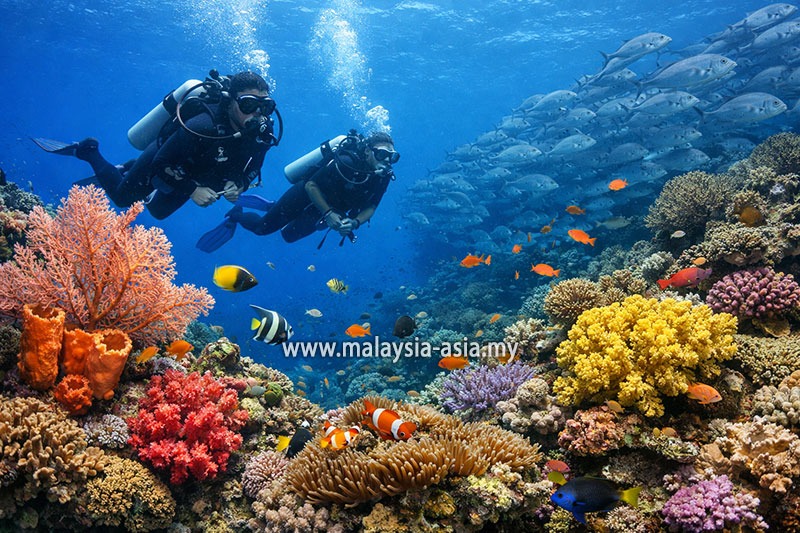
Sipadan sits in the Celebes Sea, roughly 35 kilometres off the coast of Semporna in eastern Sabah, and it is unlike any other dive site in Malaysia. It is the country’s only oceanic island, formed atop an ancient, extinct volcano that rises some 600 metres above the ocean floor. That dramatic geology, combined with its position within the nutrient-rich Coral Triangle, creates conditions for truly jaw-dropping marine encounters on virtually every dive.
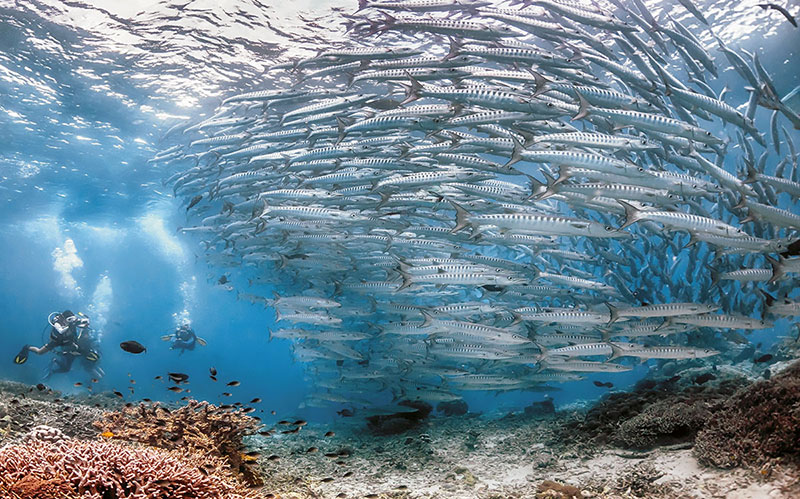
The island’s most celebrated sites include Barracuda Point, where massive, swirling tornadoes of chevron barracuda spiral through the water in hypnotic formations, and Turtle Cavern, a hauntingly beautiful underwater cave system where the skeletons of turtles that lost their way long ago line the sandy floor. The Drop Off is Sipadan’s iconic wall dive — a sheer coral cliff that plunges from just below the surface down into the abyss, draped in hard and soft corals and patrolled by blacktip and whitetip reef sharks, green and hawksbill turtles, grey reef sharks, and vast schools of bumphead parrotfish that thunder overhead like an underwater stampede. South Point is the place to look for hammerhead sharks in the deeper water, though sightings here are less reliable than at Layang Layang. Coral Garden offers gentler, shallower terrain teeming with reef life, and is a favourite for the last dive of the day.
Getting there: Fly into Tawau Airport (TWU), which is served by Malaysia Airlines and AirAsia from Kuala Lumpur and Kota Kinabalu. From Tawau, take a taxi or minibus to Semporna town (approximately 60 to 90 minutes), where your resort or dive centre will arrange the onward boat transfer. There is no accommodation on Sipadan itself — all divers stay on neighbouring islands, primarily Mabul, with Kapalai and Mataking also serving as base islands.
Dive type: All boat dives. Sipadan is accessed entirely by boat from surrounding islands, with the journey from Mabul taking approximately 35 to 45 minutes depending on sea conditions.
Certification required: As of October 2022, Sabah Parks requires all divers to hold at least an Advanced Open Water certification (PADI, SSI, NAUI, or equivalent) to dive Sipadan. Open Water certification is not sufficient. Night diving is not permitted at Sipadan.
Permit system: This is perhaps the most important logistical consideration for Sipadan. Sabah Parks issues a daily quota of permits (currently around 252 per day as of 2025), distributed among licensed dive resorts and operators. Permits cannot be obtained independently — they are arranged entirely by your resort or dive centre. Most resorts allocate permits via a rotation system, and a minimum stay of 3 nights is typically required to have a reasonable chance of diving at Sipadan. Book as early as possible, ideally six to twelve months in advance, for peak season (July, August, and Chinese New Year). Sipadan is closed every November for reef recovery. Permit fees are paid separately, with costs for non-Malaysians running approximately MYR 450 per day, including diving and conservation fees.
What you will see: Green and hawksbill turtles (abundant, on almost every dive), bumphead parrotfish, chevron and yellowfin barracuda, whitetip and blacktip reef sharks, grey reef sharks, bumphead parrotfish, giant trevally, eagle rays, moray eels, and a staggering diversity of reef fish. Pygmy seahorses and nudibranchs reward those who look closely.
Best season: March to October, with April to June offering exceptional visibility of 20 to 40 metres.
2. Mabul Island, Sabah
The muck diving capital of the world, and a macro photographer’s paradise.
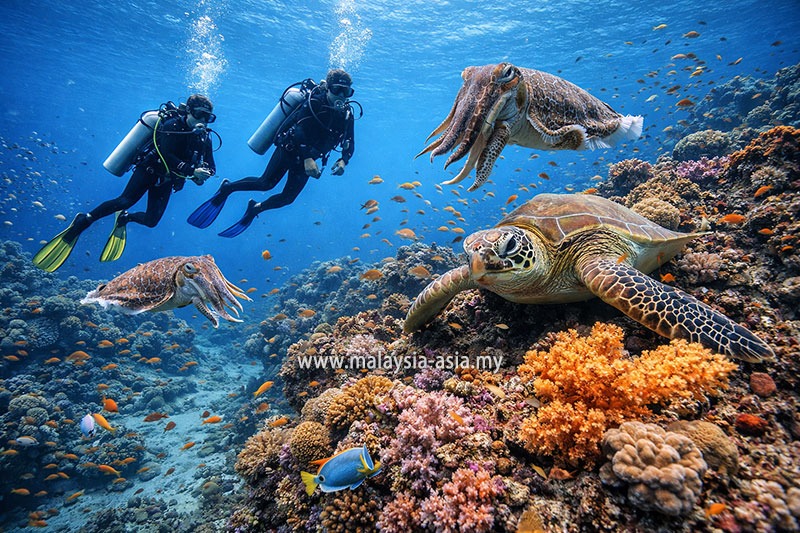
While Sipadan draws divers with pelagic drama, Mabul — located just 15 minutes by boat from Sipadan — offers the opposite experience, and it is no less extraordinary for it. Mabul is widely regarded as one of the finest muck-diving destinations on the planet, a place where the unremarkable-looking sandy and silty bottom conceals an almost bewildering abundance of rare, bizarre, and beautiful marine life. This is the domain of the underwater macro photographer, the critter hunter, and anyone who finds joy in slow, patient, forensic diving rather than big-fish spectacle.
Among Mabul’s most celebrated residents are the giant frogfish, the flamboyant cuttlefish (which flashes psychedelic pinks and purples as it walks along the seabed), the mimic octopus, the blue-ringed octopus, ghost pipefish, ribbon eels, mandarinfish (best seen at dusk), and dozens of species of nudibranchs in every colour imaginable. One of the most unique dive experiences anywhere in Malaysia is Seaventures, a former oil rig converted into a dive resort that sits 500 metres offshore from Mabul. Diving under the rig’s structure reveals an artificial reef of extraordinary complexity, with the platform’s legs encrusted in corals and sponges and home to a dense concentration of critters. Froggy Lair, just off Mabul’s jetty, is another icon of the dive world — depths rarely exceed 10 metres, but the marine life density is astonishing.
Getting there: As above for Sipadan — fly to Tawau, transfer to Semporna, then take a speedboat to Mabul (35 to 45 minutes). Mabul has a wide range of accommodation from budget backpacker resorts to mid-range chalets and the unique Seaventures oil rig resort, making it accessible at various price points.
Dive type: Mix of boat dives and shore/jetty dives. Several dive sites, including Froggy Lair and the Seaventures house reef, can be accessed directly from the shore or jetty, making it one of the few places in Malaysian Borneo where shore diving is genuinely excellent. No Sipadan permit is required to dive Mabul itself.
Certification required: Open Water certification is sufficient for most Mabul dive sites, which are generally shallow (average depth 10 to 15 metres). Advanced Open Water opens up deeper sites and the option to dive Sipadan on the same trip.
What you will see: Frogfish (giant, painted, and warty varieties), flamboyant cuttlefish, mimic and blue-ringed octopus, mandarinfish, ghost pipefish, ribbon eels, crocodile fish, scorpionfish, nudibranchs, pygmy seahorses, and countless species of shrimp and crab. Macro photographers should budget multiple dive days here.
Best season: Year-round, with July and August being particularly popular.
3. Layang Layang (Swallow Reef), Sabah
Malaysia’s frontier — where walls drop 2,000 metres and hammerheads school in the blue.
Layang Layang is the most remote dive destination in Malaysia and, arguably, the most dramatic. An isolated coral atoll in the South China Sea, located roughly 300 kilometres northwest of Kota Kinabalu in the Spratly Islands group, Layang Layang sits in waters so deep (the surrounding seafloor plunges to around 2,000 metres) and so unpolluted by human activity that its reefs are among the most pristine anywhere in Southeast Asia. The atoll is also home to a Royal Malaysian Navy base, whose presence has effectively protected the surrounding waters from fishing and human disturbance for decades.
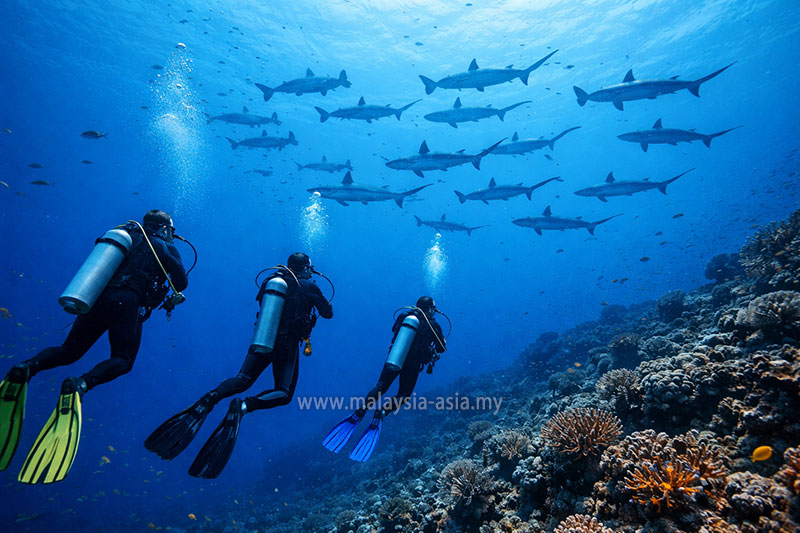
The signature experience here is the scalloped hammerhead shark, which gathers in large schools — sometimes numbering in the hundreds — in April and May for mating season. Sightings are possible outside these months but are considerably less reliable. The diving itself is characterised by sheer walls, world-class visibility (regularly 20 to 40 metres, sometimes exceeding 50 metres), and a cast of large pelagic species, including grey reef sharks, leopard sharks, whitetip reef sharks, dogtooth tuna, giant trevally, barracuda, manta rays, and eagle rays. There are approximately 13 dive sites around the atoll, all accessed by boat and reachable within 5 to 15 minutes. D’Wall is a vertically overhanging wall encrusted with barrel sponges, gorgonian fans, and nudibranchs. Gorgonian Forest is the best site for hammerhead encounters, where strong currents draw in the big fish. The Lagoon offers shallower, gentler diving with seahorses, cuttlefish, and pipefish.
Getting there: The only way to reach Layang Layang is by charter flight from Kota Kinabalu, approximately 1 to 1.5 hours. Historically, these flights were arranged exclusively through Layang Layang Island Resort (Avillion). However, as of early 2025, the resort has been closed to tourists, and it is unclear when operations will resume. Divers should check the current status with Sabah-based dive operators before planning a trip. Kota Kinabalu (KK) is well connected domestically via Malaysia Airlines and AirAsia from Kuala Lumpur, Penang, and other major cities, and internationally from Singapore and Hong Kong.
Dive type: All boat dives. The atoll is open only from March to August.
Certification required: Advanced Open Water certification is strongly recommended, and most operators require it. Wall dives are deep (to 40 metres), currents can be strong, and the nearest decompression chamber is a considerable distance away. This destination is best suited to experienced divers with comfortable buoyancy control.
What you will see: Schooling scalloped hammerhead sharks (April to May), grey and whitetip reef sharks, manta rays, eagle rays, dogtooth tuna, leopard sharks, barracuda, giant trevally, hawksbill turtles, pygmy seahorses, nudibranchs, and magnificent gorgonian sea fans.
Best season: March to August, with April to May being peak hammerhead season.
4. Perhentian Islands, Terengganu
Peninsular Malaysia’s most beloved dive destination, which is relaxed, affordable, and enchanting.
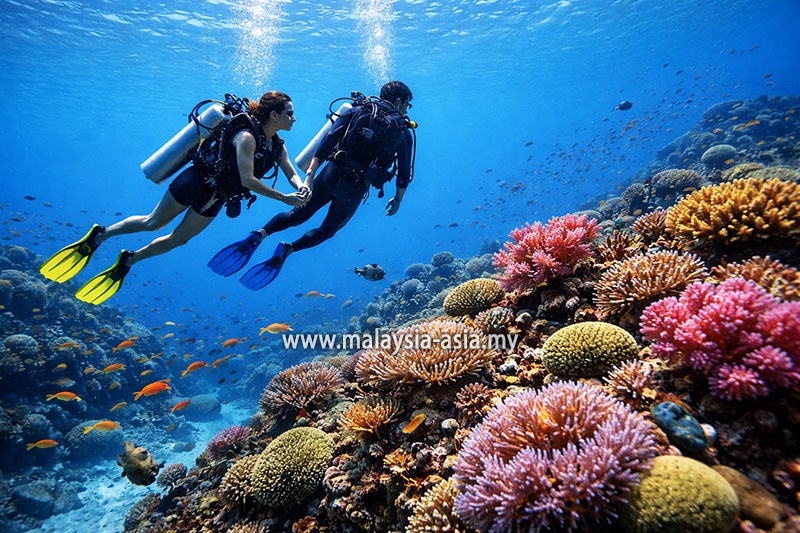
The Perhentian Islands — comprising Pulau Perhentian Besar (Big Island) and Pulau Perhentian Kecil (Little Island) — sit roughly 20 kilometres off the east coast of Terengganu, within the protected waters of the Terengganu Marine Park. They are among the most visited dive destinations in Peninsular Malaysia, and for good reason: the islands combine beautiful white sand beaches, warm, clear water, abundant and accessible marine life, and a laid-back atmosphere that makes them equally appealing to new divers, backpackers, and experienced divers looking for easy, enjoyable dives without the logistics and cost of Sabah.
The Perhentians’ most famous dive site is Tokong Laut (also called The Pinnacle), a seamount about 25 minutes by boat from the islands that rises dramatically from the seabed and is surrounded by an almost aquarium-like density of marine life. Turtles, bamboo sharks, blacktip reef sharks, barracuda, fusiliers, tuna, and giant pufferfish are all commonly encountered here, and on rare occasions, whale sharks have been spotted. Closer to shore, Shark Point at the southern tip of Perhentian Besar is a shallow reef (maximum depth of 9 metres) famous for blacktip reef shark sightings. The wreck diving at the Perhentians is also noteworthy — the Sugar Wreck is a 300-foot cargo ship lying on its side at around 18 metres, now colonised by healthy coral and home to bamboo sharks, barracuda, and schools of snappers and trevally. The Three Brothers (Terumbu Tiga), a formation of large boulders creating swim-throughs and canyons, is another firm favourite.
Getting there: Fly into Kota Bharu Airport (KBR) from Kuala Lumpur (approximately 50 minutes with AirAsia), then take a taxi to Kuala Besut jetty (approximately one hour, around MYR 50). From Kuala Besut, speedboats run regularly to the Perhentians during the season (April to October), with the crossing taking approximately 30 minutes. Alternatively, the islands are accessible by bus and car from Kuala Lumpur in approximately six hours, with a stop at Kuala Besut for the ferry.
Dive type: All boat dives, with the exception of a few shore-accessible reef areas. The dive shops, nearly all of which are clustered along the beaches, run regular daily boat trips to all the main sites. Prices are among the most affordable in Malaysia.
Certification required: Open Water certification is sufficient for all main sites. The Perhentians are an excellent and popular place to learn to dive and obtain PADI certification, with multiple PADI centres operating on both islands. The maximum depth at most sites is around 24 metres, making them accessible and comfortable for newer divers.
What you will see: Green and hawksbill turtles (very common), blacktip reef sharks, bamboo sharks, spotted stingrays, barracuda, giant moray eels, pufferfish, triggerfish, octopus, bumphead parrotfish, and a wide variety of colourful reef fish. Whale sharks are an occasional and magical bonus at The Pinnacle.
Best season: April to October. The islands effectively close down from November to March during the northeast monsoon.
5. Pulau Redang, Terengganu
Crystal clarity, healthy coral, and the finest reef diving on the east coast of the peninsula.
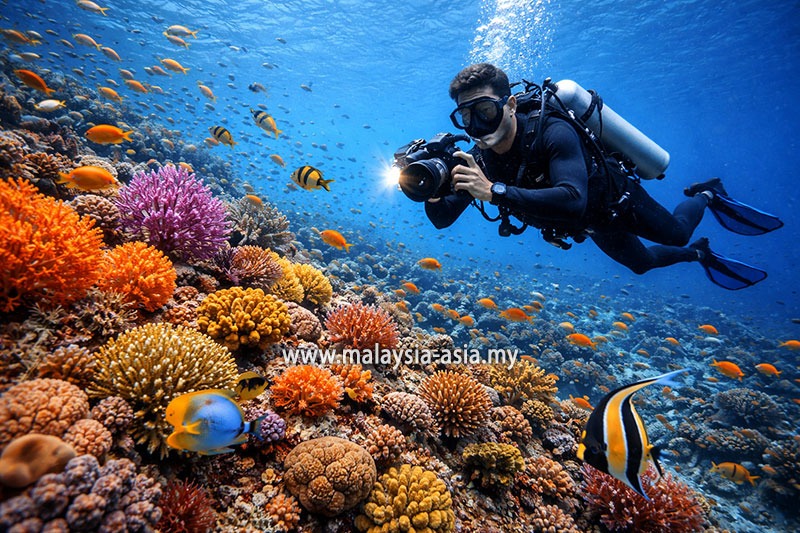
Redang is the largest island in the Terengganu Marine Park archipelago and is widely considered to have the clearest water and healthiest coral of any island on Peninsular Malaysia’s east coast. Where the Perhentians offer a more rustic, budget-friendly experience, Redang leans toward established resort diving with well-maintained dive sites and superb visibility — commonly 15 to 25 metres, and sometimes remarkably higher in the right conditions.
Pulau Lima, a seamount dive site just off Redang’s southern coast, is the island’s standout experience for advanced divers. Impressive coral-adorned boulders rise from around 30 metres and attract large pelagic species, including tuna, barracuda, reef sharks, manta rays, and, on exceptional days, whale sharks. The northern sites around Redang tend to have the most prolific and healthiest coral growth, with spectacular fish life and exciting topography for experienced divers. The southern sites, which experience stronger currents, reward the same adventurous diver but require more experience. For those seeking a gentler introduction, the shallow reefs around Tanjung Tokong and Turtle Bay are ideal, with a high probability of turtle encounters and beautiful coral gardens. Redang also offers good macro diving on its southern muck sites, which come into their own for photographers hunting for the unusual.
Getting there: Fly into Kuala Terengganu Airport (TGG) from Kuala Lumpur (approximately 45 minutes), then transfer by speedboat to Redang (approximately 45 minutes to one hour). Some resorts arrange direct speedboats from Merang Jetty. Alternatively, drive or take the bus from KL to Terengganu (approximately five hours) and connect by boat. Redang has a small airstrip that previously received small charter flights; check current availability with your resort.
Dive type: All boat dives. Most resorts offer comprehensive dive packages including equipment, multiple daily dives, and guiding.
Certification required: Open Water certification is sufficient for the majority of Redang’s dive sites, particularly the shallower northern reefs. Advanced Open Water is recommended for Pulau Lima and the deeper southern sites where currents can be significant.
What you will see: Green and hawksbill turtles, blacktip reef sharks, whitetip reef sharks, barracuda, tuna, giant trevally, reef fish in an enormous variety, colourful soft and hard corals, moray eels, and — at the right sites and season — manta rays and whale sharks.
Best season: March to September, with March to June offering the best visibility before the season peak brings more visitors.
6. Pulau Tioman, Pahang
Accessible, affordable, diverse, and the most popular dive destination for divers from Kuala Lumpur and Singapore.
Tioman is a large, densely forested island off the east coast of Pahang, and it has long been one of Malaysia’s most popular dive destinations for a combination of reasons: it is relatively easy to reach from the capital, it offers diving for all levels, it is one of the most affordable places in the country to complete PADI certification, and its more than 25 dive sites provide enough variety to keep divers busy for a week or more. The island sits within the Pulau Tioman Marine Park, which provides some protection for its reefs.
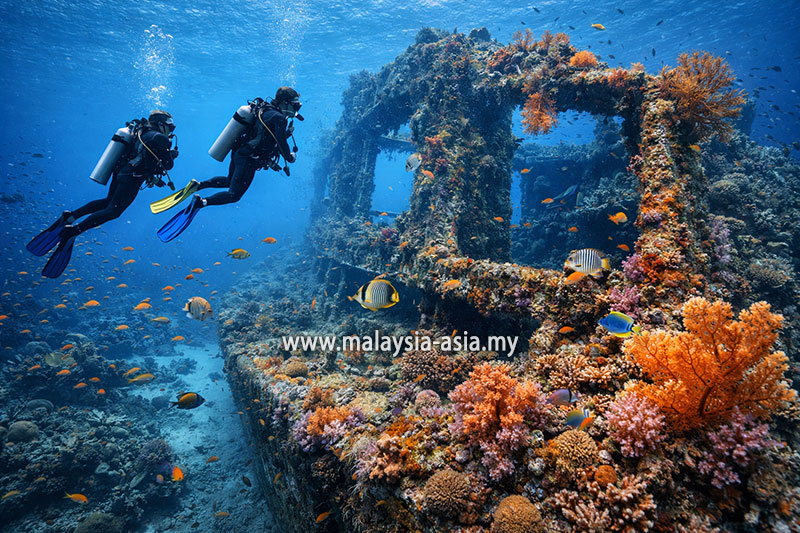
Tiger Reef is Tioman’s showpiece dive site, a coral-encrusted pinnacle that explodes with colour and marine life. When the current runs, enormous schools of rainbow runners, jacks, mackerel, and barracuda wheel above the reef while reef sharks patrol the edges. The canyons and overhangs at Tiger Reef are equally rewarding — lionfish, scorpionfish, spotted stingrays, and giant moray eels lurk in the shadows. Renggis Island, just a minute or two by boat from the main island, is essentially a large staghorn coral garden that draws turtles and reef sharks to its relatively shallow structure and is ideal for newer divers. Juara Bay on the island’s quieter east side is Tioman’s best macro site, its sandy bottom hiding an excellent selection of critters. The Sawadee Wreck, resting at around 30 metres, attracts schools of batfish and jacks and is accessible for advanced divers. The Bus Stop, an artificial reef created from sunken vehicles, is a quirky and productive dive for critter hunters.
Getting there: From Kuala Lumpur, drive approximately four to five hours south toward Mersing in Johor, then take a ferry or speedboat to Tioman (approximately two to three hours depending on vessel and sea conditions). There is also a small airport on Tioman (TOD) served by seasonal charter flights from KL and Singapore — check current availability as schedules vary. Tioman is busiest on weekends when day-trippers from Singapore and KL pour in; mid-week visits offer a calmer experience.
Dive type: Mix of boat dives and shore dives. Some sites, including the house reef at certain resorts and Juara Bay, are accessible from the shore, making Tioman one of the more flexible dive destinations on the peninsula. Multiple dive operators are based in the main villages of Tekek, ABC, and Salang.
Certification required: Open Water certification is required for the vast majority of Tioman’s dive sites. Advanced Open Water is useful for the deeper wrecks and current-prone sites like Tiger Reef. Tioman is one of Malaysia’s most popular places to learn to dive, with PADI Open Water courses offered at very competitive prices.
What you will see: Hawksbill and green turtles, blacktip reef sharks, coral cat sharks, barracuda, moray eels, lionfish, scorpionfish, mandarinfish (at Juara Bay), nudibranchs, cuttlefish, and a broad diversity of colourful reef fish.
Best season: March to October. The island is affected by the northeast monsoon from November to February.
7. Pulau Tenggol, Terengganu
Terengganu’s best-kept secret, which is unspoilt, uncrowded, and occasionally visited by whale sharks.
Tenggol is a small, traditionally uninhabited island measuring approximately three by two kilometres, located off the coast of Dungun in southern Terengganu. It receives far fewer visitors than the Perhentians or Redang, and that relative obscurity has helped preserve its reefs in excellent condition — some divers and dive writers have even called it the best diving in Peninsular Malaysia. With more than 20 dive sites and only a handful of small resorts on the island, it is one of the few places on the East Coast where you can spend a morning on a pinnacle dive with not another diver in sight.
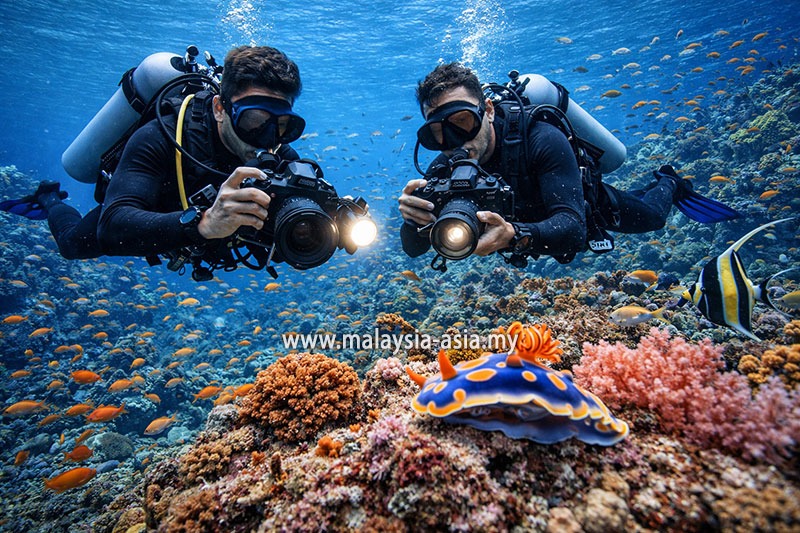
The underwater topography at Tenggol is impressive: the island is ringed by deep sloping reefs, dramatic walls, submerged pinnacles, and enormous boulder formations that create caves, canyons, and swim-throughs. Tokong Timur, an outlying rock island to the south of Tenggol, is the most celebrated site — it is the best place in Peninsular Malaysia to encounter whale sharks, which appear seasonally between August and October. The surrounding reef is packed with action: giant trevally, barracuda, batfish, humphead parrotfish, and bumphead parrotfish are regular visitors when conditions are good. Tanjung Api on the northern tip of the island offers superb drift diving along walls covered in sea fans and hard corals. For wreck enthusiasts, the Malaysian Marine Park Department has deliberately sunk several vessels around Tenggol to create artificial reefs, including the Sawadee Wreck, the Five Sisters Wreck, the Fisherman Wreck, and the Deep Wreck, the deepest of which sits at 34 metres.
Getting there: Head to Dungun town in Terengganu, which is accessible by car or bus from Kuala Lumpur (approximately four to five hours) or Kuala Terengganu (approximately one hour south). From Dungun Jetty, boats depart for Tenggol at around 8 am (the latest recommended departure is 10.30 am to arrive before check-in at noon). The boat crossing takes approximately 35 minutes.
Dive type: All boat dives. There are no shore dive options at Tenggol. The island’s small resorts — Tenggol Aqua Resort and Tenggol Island Beach Resort — organise daily dive trips to all sites.
Certification required: Open Water certification is sufficient for most of Tenggol’s reef and shallow sites. Advanced Open Water is required for the deeper wrecks and the more current-exposed northern sites. Some drift dives and deeper pinnacles are better suited to experienced divers comfortable managing stronger currents.
What you will see: Whale sharks (August to October), humphead parrotfish, giant trevally, barracuda, batfish, leopard sharks, moray eels, turtles, ornate ghost pipefish, nudibranchs, and excellent soft and hard coral cover on healthy reefs.
Best season: March to September. The island is inaccessible during the monsoon from October or November through to February or March.
8. Lankayan Island, Sabah
A remote, exclusive island where pristine reefs, muck diving, and easy wrecks coexist.
Lankayan is a tiny, low-lying island in the Sugud Islands Marine Conservation Area, located approximately 90 minutes by speedboat from the town of Sandakan in northern Sabah. With just one resort on the island — the Lankayan Island Dive Resort — and approximately 30 dive sites within easy reach, Lankayan offers an intimate, uncrowded diving experience that contrasts sharply with the better-known destinations further south. It sits in a different marine environment from Sipadan — shallower, calmer, and richly productive — and is particularly well regarded for combining beautiful coral reef diving, accessible muck diving, and easy wreck diving at a single destination.
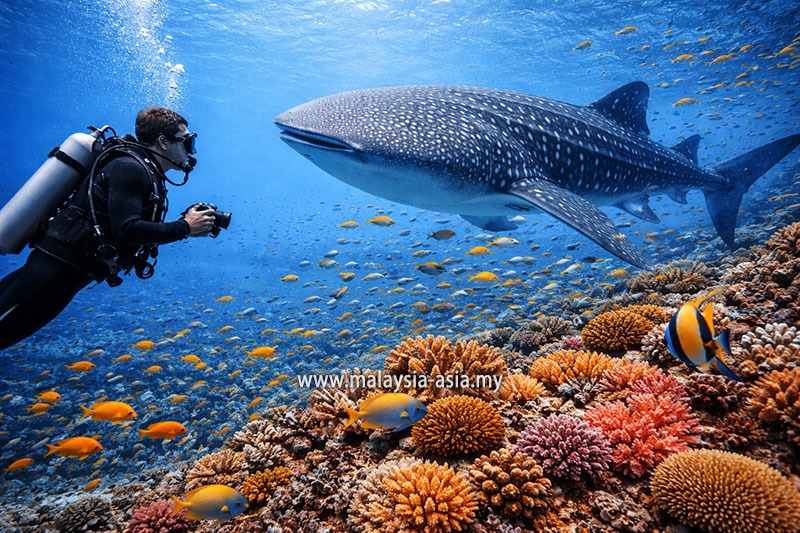
The reefs around Lankayan are genuinely beautiful, with healthy coral gardens in calm, clear conditions that suit divers of all levels. The muck diving offers an excellent array of critters, including nudibranchs, ghost pipefish, sea horses, and various cephalopods. The Lankayan Wreck, a scuttled illegal fishing vessel moored directly in front of the resort, is a shallow and accessible wreck that has been colonised by groupers, ghost pipefish, pipefish, and yellow pike. Whale sharks are seasonal visitors to Lankayan between March and May, adding an extra dimension of excitement to the island during those months. The island is also a nesting site for green turtles, and encounters with these animals in the water are common year-round.
Getting there: Fly into Sandakan Airport (SDK) from Kota Kinabalu or Kuala Lumpur. From Sandakan, take the resort’s arranged speedboat transfer to Lankayan, approximately 90 minutes. Given its remote location and single-resort status, Lankayan is typically booked as an all-inclusive dive resort package directly through the resort.
Dive type: Mix of boat dives and one accessible shore/jetty dive (the Lankayan Wreck, which is directly in front of the resort). Most sites require a short boat ride of 10 to 30 minutes.
Certification required: Open Water certification is sufficient for the vast majority of Lankayan’s sites, which are generally shallow and calm. This makes Lankayan an excellent choice for less experienced divers who still want a remote, high-quality Sabah diving experience without the complexity of Sipadan logistics.
What you will see: Green turtles, whale sharks (March to May), ghost pipefish, seahorses, nudibranchs, groupers, various reef fish, and the full suite of critters found in Sabah’s waters.
Best season: March to October, with March to May being particularly good for whale shark encounters.
9. Pulau Payar Marine Park, Kedah (Langkawi)
West coast diving for the monsoon months, and the most accessible dive site in northern Malaysia.
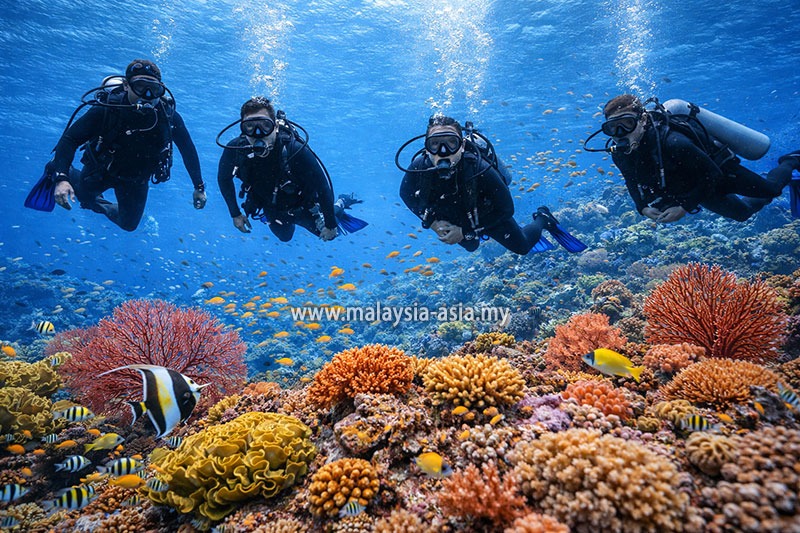
When the northeast monsoon shuts down the east coast from November to March, Pulau Payar Marine Park near Langkawi becomes the primary dive option for Peninsular Malaysia. Located approximately 30 kilometres south of Langkawi in the Andaman Sea, Pulau Payar is part of a small marine park encompassing the islands of Payar, Lembu, Kaca, and Segantang. It is decidedly not a world-class dive site in the way that Sipadan or even the Perhentians are, but it fills an important role as the most accessible and beginner-friendly dive destination in northern Malaysia, and it delivers a pleasant, uncrowded reef experience in protected, calm conditions.
The Coral Garden at Pulau Payar is the signature site, a protected area known for vibrant, colourful hard and soft corals in shallow, clear water. Juvenile blacktip reef sharks are commonly seen in the shallows, and the site is excellent for snorkelling as well as diving. The Kaca Sunken Wrecks site features a dozen fishing boats deliberately sunk to create an artificial reef habitat, attracting groupers, lionfish, moray eels, and various reef fish. Pulau Segantang, a nearby site, features limestone karsts dropping 20 metres to the seafloor, covered in hard corals and sea fans, with a resident population of nurse sharks and barracuda. For the more adventurous, the open waters occasionally deliver jacks and pelagic species.
Getting there: Fly or ferry to Langkawi. Langkawi is well connected by air from Kuala Lumpur, Penang, and Singapore, and by fast ferry from Penang (approximately 2.5 hours) and Kuala Perlis (approximately 45 minutes). From Langkawi, multiple dive operators based on the island offer full-day boat trips to Pulau Payar, with the journey taking approximately 45 minutes to one hour.
Dive type: All boat dives departing from Langkawi. Day-trip packages including gear, two dives, and a guide are widely available and competitively priced.
Certification required: Open Water certification is all that is needed for Pulau Payar. This is one of the most beginner- and family-friendly dive destinations in Malaysia, with gentle currents and shallow sites making it an excellent place for newly certified divers to build confidence.
What you will see: Blacktip reef sharks (juveniles), nurse sharks (at Segantang), lionfish, groupers, moray eels, barracuda, jacks, and a wide variety of colourful reef fish and corals. Manta rays and pelagics appear occasionally in the open water.
Best season: November to April, when the west coast has calm conditions, and the east coast is in monsoon. Some diving continues year-round, though conditions are less predictable during the southeast monsoon from May to October.
10. Kapalai Island, Sabah
An artificial reef dreamland — and one of Southeast Asia’s finest macro and night dive destinations.
Kapalai sits between Sipadan and Mabul, technically a sandbank barely above the waterline rather than a true island, but its only resort — Kapalai Dive Resort, built on stilts above the shallow sea — is famous throughout the diving world as a gateway to some truly exceptional underwater experiences. Like its neighbour Mabul, Kapalai is primarily a macro and critter diving destination, but the nature of its dive sites is somewhat different: where Mabul’s best diving happens on sandy muck slopes, Kapalai’s house reef is an elaborate artificial reef created from deliberately sunk structures including wrecks, concrete modules, and man-made frameworks that have attracted an extraordinary density of marine life over the years.
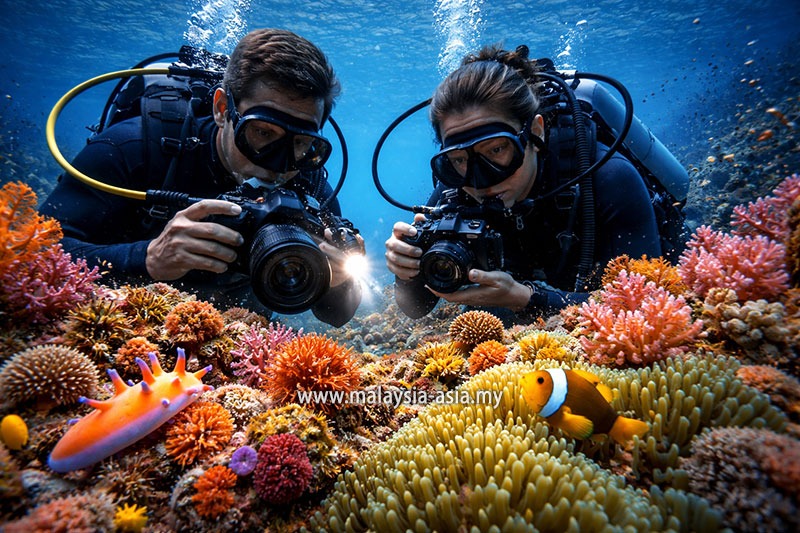
Kapalai House Reef is the centrepiece, an artificial reef system made up of wrecks, houses, towers, and bridges that has become a thriving ecosystem packed with rare macro species. Blue-ringed octopus, leopard shrimp, harlequin shrimp, Pikachu nudibranchs, ghost pipefish, frogfish, cuttlefish, and seahorses all inhabit and surround the structures. Night diving at Kapalai is particularly rewarding, with a host of nocturnal species emerging after dark, including mandarinfish (another spectacular dusk ritual), various crustaceans, flatworms, and hunting cuttlefish. Being so close to Sipadan — approximately 15 minutes by boat — Kapalai is typically paired with a Sipadan day trip as part of a Semporna-area diving package, allowing divers to enjoy the best of both pelagic and macro worlds.
Getting there: As with Sipadan and Mabul — fly to Tawau, transfer to Semporna, then take a speedboat to Kapalai (approximately 45 minutes to one hour). The island has one resort (Kapalai Dive Resort), which must be booked directly and typically offers all-inclusive dive packages. Note that the resort’s boat to Sipadan requires divers to have a minimum of 15 logged dives in addition to Advanced Open Water certification.
Dive type: Mix of boat dives and shore/jetty dives directly from the resort’s structure. The house reef is accessible from the resort’s water platform at any time during daylight hours, making it excellent for multiple dives per day, including dawn and dusk sessions. No Sipadan permit is required to dive Kapalai’s own sites.
Certification required: Open Water certification suffices for Kapalai’s own house reef sites. Advanced Open Water and a minimum of 15 logged dives are required to join the resort’s Sipadan dive trips. The shallow average depth (10 to 15 metres) makes Kapalai’s own sites accessible and very comfortable for divers of all levels.
What you will see: Blue-ringed octopus, frogfish, flamboyant cuttlefish, mandarinfish (at dusk), ghost pipefish, nudibranchs in spectacular variety, harlequin shrimp, leopard shrimp, seahorses, ribbon eels, and a host of nocturnal macro life on night dives.
Best season: Year-round, with July and August being the most popular. March to October generally offers the best visibility and calmest sea conditions.
Planning Your Trip: Essential Notes for All Divers
Certification and agencies: Malaysian dive operators accept certifications from all major agencies, including PADI, SSI, NAUI, BSAC, CMAS, SDI, and TDI. Always carry your dive certification card (physical or digital) and a logbook. For Sipadan specifically, Advanced Open Water is the legal minimum — do not assume Open Water is sufficient.
Dive insurance: Consider purchasing dedicated dive insurance from providers such as DAN (Divers Alert Network) or similar organisations before your trip. Malaysia’s more remote dive sites, particularly Layang Layang and Sipadan, are considerable distances from the nearest hyperbaric chambers.
Nitrox: Many resorts and dive centres across Malaysia offer enriched air (Nitrox) to certified Nitrox divers, a useful add-on for extending bottom time on shallower macro sites. Nitrox certification can be completed as an additional course at most PADI centres in the country.
Best general season: March to October covers the east coast, Sabah, and Layang Layang. For Langkawi and the west coast, November to April is optimal.
A Note on the Diving Season in Malaysia
- East Coast Peninsular Malaysia (Perhentian, Redang, Tioman, Tenggol): Best dived April to October. Closes during the northeast monsoon from roughly November to March.
- Sabah (Sipadan, Mabul, and surrounding sites): Diveable year-round, with March to October being optimal.
- Layang Layang: Open only from March to August.
- West Coast (Pulau Payar / Langkawi): Best from November to April — a useful alternative when the east coast is in monsoon.
Best Place to Get Scuba Diving Packages for Malaysia
While most dive centres are independent, the best place to get more information and very impressive packages is at the Malaysia International Dive Expo, held mid-year in Kuala Lumpur. MIDE, as it is known, is the largest and most popular dive expo in the country and attracts over 100,000 visitors in the three days of the expo.
Conclusion
Malaysia’s diving geography is a gift to any diver. In a single country, you can experience the world-beating wall dives and turtle abundance of Sipadan, the uncanny macro universe of Mabul and Kapalai, the frontier hammerhead drama of Layang Layang, the relaxed and affordable reef diving of the Perhentians and Redang, the unspoilt pinnacles and whale shark encounters of Tenggol, the diverse wrecks and accessible reefs of Tioman, the remote exclusivity of Lankayan, and the beginner-friendly charm of Pulau Payar. No single trip will cover everything, as each destination has its own character, its own seasonal rhythm, and its own rewards for the diver willing to seek it out.
For the Malaysian diver, this is an embarrassment of riches waiting to be explored, often within a short domestic flight or a few hours’ drive. For the visiting diver, Malaysia deserves to be ranked alongside the Coral Triangle’s most celebrated destinations: Raja Ampat, Komodo, and the Banda Sea. The underwater world here is extraordinary. Go dive it.
All information is accurate to the best of the author’s knowledge at the time of writing. Permit systems, resort operations, and airline routes are subject to change. Always verify current requirements directly with your chosen dive operator or resort before travel. Layang Layang resort closure status should be confirmed with Sabah-based dive operators prior to planning a visit.
Share this content: